
Choosing the right End Dump Truck can influence productivity, fuel use, site safety, and long-term operating costs. Global buyers face different roads, climates, payload rules, and maintenance conditions. A truck suited to a dry quarry may struggle on a wet construction site. Size alone is not enough.
Industry consultant Keith Haddock offers a practical reminder: “The right truck is chosen by the work, not by its size.” That principle guides this 2026 overview of leading End Dump Truck types for international buyers. We examine standard rear dumpers, articulated dump trucks, off-highway models, lightweight units, and severe-duty configurations. Each type has a different purpose. Some prioritize highway mobility. Others deliver stability on steep haul roads or loose ground.
Real purchasing decisions often begin with simple details. Can the chassis handle repeated loading? Does the hydraulic system remain responsive in cold mornings? Will local technicians find replacement parts quickly? These questions matter more than impressive brochure figures. Payload claims may also vary with body material, tire selection, and regional specifications. Buyers should verify working capacity, not only rated capacity.
There is no perfect truck.
A reliable choice balances payload, terrain, service access, fuel consumption, operator visibility, and resale value. This guide compares those factors with global conditions in mind. It also acknowledges an uncomfortable truth: some specifications look excellent on paper but perform poorly when maintenance support is weak. Careful evaluation remains essential, especially when purchasing across borders.
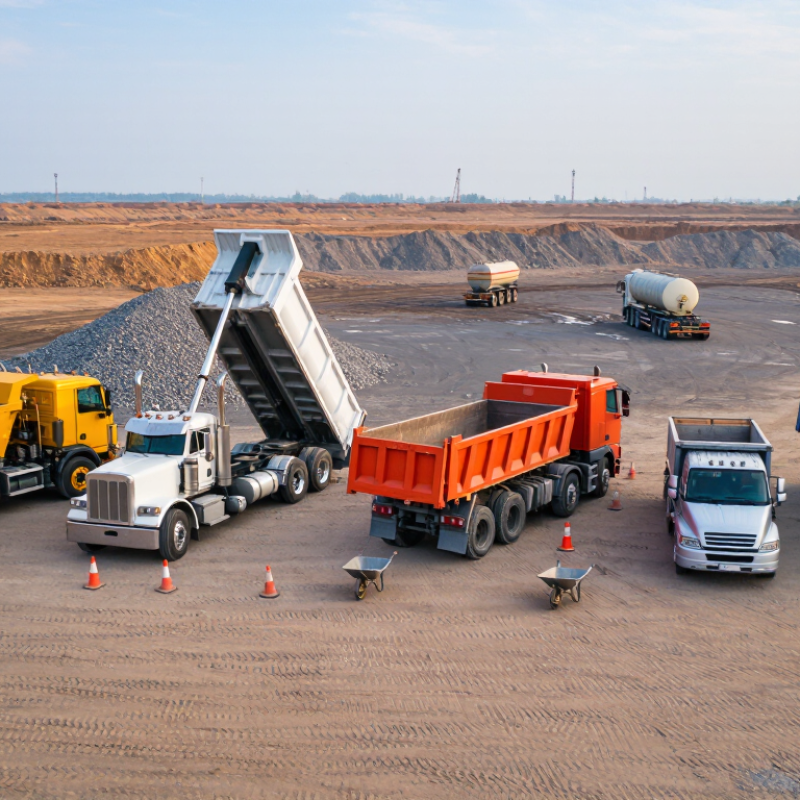
For 2026 purchasing, payload class matters more than engine size. A 20–30-ton end dump truck suits road construction, aggregates, and smaller quarry benches. These units often offer easier site access, lower tire costs, and simpler loading cycles. A 30–45-ton truck fits larger quarries and infrastructure projects. It balances production with maneuverability.
The 45–60-ton class targets deep quarries, major earthworks, and mining support roads. Rigid frames usually handle high payloads on prepared haul routes. Articulated designs perform better on uneven ground and changing gradients. The choice depends on haul distance, road quality, and loading equipment. Not every 60-ton truck delivers better economics.
Off-Highway Research’s 2024 construction equipment review shows continued demand from infrastructure and resource projects. The World Bank’s April 2025 Commodity Markets Outlook forecasts commodity prices falling 5% in 2025 and another 2% in 2026. That pressure makes fuel use, payload compliance, and maintenance access more important. Buyers should compare rated payload with actual operating payload. Metric tons and short tons are not interchangeable. This classification is useful, but imperfect.
A practical review should measure cycle time beside the loading face. Check tire width, turning radius, braking performance, and body clearance.
Telematics can verify idle time and overload events. Specifications can look impressive. Field conditions decide the result.
Body design should match the 40°–50° dumping range, not merely the advertised payload. Rear dumpers usually work well at 45°–50°, especially on quarry roads and uneven construction sites. Their high lift clears sticky soil, but it also raises the center of gravity. Side dumpers often operate around 40°–45°. They unload beside barriers, reducing reversing movements in narrow work zones. Bottom dumpers use a lower opening and a shorter discharge path. They suit dry, free-flowing aggregate and controlled spreading. Wet clay can bridge inside the body. That detail is often underestimated.
The International Energy Agency reports that road freight creates roughly one-quarter of road-transport carbon dioxide emissions. Efficient body selection therefore matters beyond purchase price. A lighter body may improve fuel use, but excessive weight reduction can shorten service life.
The 2024 Global Construction Perspectives forecast also expects strong long-term construction demand, increasing pressure for durable, productive equipment.
These figures support careful specification, not automatic upsizing. A 50° angle is not always better. Material moisture, tailgate design, hydraulic stability, and axle loading can change the result.
Tips: Request a test with your actual material. Measure unloading time, residue, stability, and hydraulic cycle time. Check the body angle on level and sloped ground. A 45° design may be the safer compromise, but site evidence should decide.
For global buyers, a 2026 end dump truck is no longer chosen by payload alone. Powertrain selection must match local emission rules, duty cycles, and energy access. Diesel remains practical for remote quarries and long shifts. Modern engines can meet stricter limits through particulate filters and advanced exhaust treatment. However, fuel costs and after-treatment maintenance remain important risks.
CNG trucks can reduce local particulate emissions and often operate more quietly. Their climate benefit is less certain when methane leakage occurs during production or fueling. The International Council on Clean Transportation reports that gas trucks may deliver limited lifecycle advantages over diesel under high leakage conditions. Electric trucks produce no tailpipe emissions and suit urban construction, short hauls, and fixed routes. The IEA’s Global EV Outlook 2025 shows continued growth in electric heavy-duty vehicle deployment, although charging infrastructure remains uneven. Battery weight also reduces usable payload in some applications.
Emission rules are developing at different speeds. United States buyers must prepare for EPA heavy-duty standards beginning in 2027, while European fleets should monitor Euro 7 implementation timelines and local access restrictions. China and other markets apply their own testing and compliance schedules. A 2026 purchase decision needs route data, not assumptions. A 300-kilometer quarry cycle may expose charging weaknesses. A diesel truck may look cheaper initially, yet idle hours can change the calculation. Even lifecycle studies, including ICCT assessments, depend heavily on electricity sources and methane controls. The spreadsheet is useful, but it is not the whole job.
| Truck Type | Typical Configuration | Typical Payload | Powertrain Output | Energy or Fuel Consumption | Practical Operating Range | Best-Fit Applications | 2026 Emission-Rule Considerations |
|---|---|---|---|---|---|---|---|
| Heavy-Duty Diesel Rigid Dump Truck | 6×4 or 8×4 chassis; rear tipping body; high-clearance construction specification | 20–40 t | 250–450 kW | 35–65 L/100 km | 500–900 km per refueling cycle | Long-haul aggregates, mining support, infrastructure projects, remote worksites | Requires the latest applicable heavy-duty diesel certification, particulate filtration, selective catalytic reduction, and low-sulfur fuel. Buyers should verify local requirements because 2026 rules differ by jurisdiction. |
| Articulated Diesel Dump Truck | 6×6 articulated hauler; oscillating joint; all-wheel drive for uneven terrain | 25–45 t | 300–600 kW | 45–90 L/100 km | 350–700 km per refueling cycle | Quarries, earthmoving, off-road construction, steep or low-traction routes | Off-road machines may follow different rules from on-road trucks. Confirm whether the vehicle is regulated under road-vehicle or non-road-engine standards in the destination market. |
| CNG Rigid Dump Truck | 6×4 or 8×4 chassis; spark-ignited natural-gas engine; compressed-gas cylinders mounted behind the cab or along the frame | 18–35 t | 220–400 kW | 35–60 kg CNG/100 km | 250–500 km per refueling cycle | Urban construction, municipal projects, regional aggregate delivery where gas stations are available | Tailpipe nitrogen oxides and particulate emissions can be lower than conventional diesel, but methane leakage and fuel origin affect total climate impact. Compliance depends on the local heavy-duty certification pathway. |
| CNG Articulated Dump Truck | 6×6 articulated configuration; gas engine; reinforced frame and high-capacity storage system | 25–40 t | 300–500 kW | 45–75 kg CNG/100 km | 200–400 km per refueling cycle | Controlled quarry or construction fleets with on-site or nearby high-flow CNG refueling | The additional cylinder weight can reduce payload. Safety certification, pressure-vessel inspection, venting, and fueling-site requirements must be checked before import or fleet deployment. |
| Battery-Electric Rigid Dump Truck | 4×2, 6×4, or 8×4 chassis; high-voltage battery pack; electric drive axle or e-axle; regenerative braking | 15–30 t | 200–500 kW peak | 1.0–2.0 kWh/km | 120–300 km, depending on load, terrain, and temperature | Urban construction, quarry shuttle routes, ports, recycling, and fixed-base operations | Produces zero tailpipe emissions during operation. It can support zero-emission-zone access, but buyers must assess battery manufacturing, electricity generation, charging standards, and local weight limits. |
| Battery-Electric Articulated Dump Truck | 6×6 articulated hauler; large traction battery; electric drive motors; regenerative downhill control | 25–45 t | 400–900 kW peak | 1.5–3.0 kWh/km | 80–250 km, depending on duty cycle and charging access | Short-cycle quarrying, mine-site haulage, tunneling, and return-to-base operations | Zero tailpipe emissions can simplify compliance in restricted areas. High-voltage maintenance procedures, thermal management, charging capacity, and battery payload trade-offs are critical purchasing factors. |
| Electric-Assisted or Hybrid Dump Truck | Diesel engine combined with electric motor, battery, and regenerative braking; rigid or articulated chassis | 20–40 t | 250–600 kW combined or peak output | Typically 10–25% lower fuel use than a comparable conventional diesel cycle | Similar to diesel, subject to fuel-tank and battery capacity | Repeated stop-start routes, haul roads with downhill sections, and fleets needing gradual electrification | Still requires certification as an internal-combustion vehicle unless designed for a separate zero-emission category. Verify real-world carbon reduction rather than relying only on laboratory fuel-consumption data. |
For 2026, global buyers should match dump truck specifications to terrain, payload, and local service conditions. Axle selection is critical. A two-axle truck may suit urban delivery, while three or four axles provide better load distribution on rough construction routes. Check axle ratings, not only the advertised payload. An overloaded rear axle can damage tires, suspension, and road surfaces.
GVWR combines the truck, body, fuel, passengers, and cargo. Select a safe margin above the expected working weight. Body volumes from 10 to 15 m³ fit general aggregates and municipal projects. Larger 18–25 m³ bodies support high-volume quarry or mining work, but they need stronger frames and suitable access roads. Bigger is not always better.
Hydraulic performance deserves practical testing. Review pump flow, operating pressure, cylinder stages, oil cooling, and lifting time. A slow body may reduce daily output. A poorly cooled system may lose efficiency under repeated cycles. Field inspections should include weld quality, hinge alignment, hose protection, and control response. Specifications can look perfect on paper. Real conditions may disagree.
Tips: Weigh typical loads before ordering. Confirm local axle limits. Request hydraulic cycle data, not vague claims. Leave room for seasonal mud, uneven ground, and operator error. Even experienced buyers sometimes underestimate maintenance access. That mistake is expensive.
2026 Top End Dump Truck Types for Global Buyers
A useful selection matrix begins with the worksite, not the truck’s advertised payload. Mining operations often require rigid dump trucks with high structural strength, large bodies, and stable braking on long haul roads. Articulated dump trucks suit steep, wet, or uneven terrain. Their flexible frames can maintain traction where rigid trucks may struggle.
Roadwork needs a different balance. Rear dump trucks offer controlled unloading beside compacted lanes and usually provide easier maneuverability in urban projects. Side dump models can discharge quickly when space is limited. Check turning radius, axle loading, braking performance, and cab visibility before comparing engine output. Small details matter.
Aggregates sites often favor versatile trucks that move between quarry ramps, stockpiles, and public roads. Match body volume to material density; a large body may waste capacity when carrying heavy stone. Verify local road regulations, climate protection, tire availability, and service coverage. Data sheets can look impressive. Field support may matter more.
A practical matrix should score payload, terrain, cycle time, fuel use, operator comfort, and maintenance access. Test the truck on a representative route, including slopes and rough loading areas. This step is sometimes skipped, and the result can be expensive. No universal winner exists. A carefully chosen average performer may outperform a larger machine that spends too much time waiting for repairs.
Global Selection Matrix: Typical Payload Capacity by Truck Type