
Download the 2025 Focal Car Catalogue | Focal INSIDE Catalogue | Join our Mailing List!

7 Best Conical Burr Hand Grinders for Global Buyers

Coffee remains a daily ritual across markets, but its preparation varies from kitchen counters to campsite tables. The International Coffee Organization estimated global consumption at about 177 million 60-kilogram bags in coffee year 2023/24. That scale helps explain why portable, repairable brewing tools attract buyers with different budgets and routines. Yet a grinder is not a shortcut to great coffee. Bean freshness, grind consistency, and brewing technique still matter.

A Conical Burr Hand Grinder uses paired burrs to crush beans into particles more evenly than many basic blade grinders. That can make dialing in a pour-over or espresso-style brew less frustrating, though results depend on burr geometry, adjustment range, and build quality. Small details count. A loose handle can wobble; a narrow catch cup may slow a busy morning. For global buyers, availability of replacement parts and clear adjustment markings also deserve attention.

This guide compares seven models through practical criteria: grind range, portability, materials, capacity, and ease of cleaning. It does not treat premium pricing as proof of better performance. Nor will one grinder suit every brewer. That is worth remembering. Manufacturer specifications provide a starting point, while hands-on testing and independent reviews can reveal trade-offs those figures miss. The best choice is the one that fits your brewing method, hand strength, travel habits, and willingness to adjust settings.
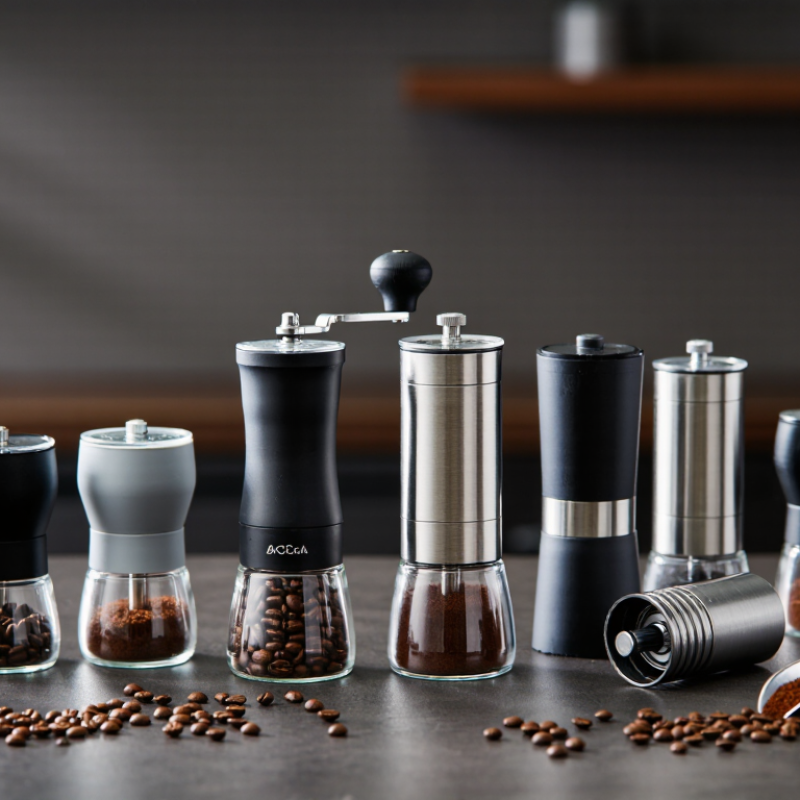
7 Best Conical Burr Hand Grinders for Global Buyers

How Conical Burr Hand Grinders Work

A conical burr hand grinder uses two cone-shaped grinding surfaces: an inner burr turns while an outer burr remains fixed. Whole beans enter the gap from above and are crushed as they move downward. Turning the handle supplies the force. The burrs cut and shear beans into particles rather than simply smashing them between flat plates. The result is a range of grounds whose size depends largely on the distance between the burrs.

A finer setting narrows that gap; a coarser setting widens it. Many grinders adjust through a dial or stepped clicks, though the exact mechanism varies. Small changes can affect how quickly water passes through coffee, so changing one setting at a time makes comparisons more useful. Keep the handle turning steadily, and avoid forcing it if a bean catches. It happens. Burr alignment, bean size, and the speed of grinding can also influence particle consistency. A hand grinder will not produce perfectly identical grounds, and that imperfection deserves attention rather than denial. For a practical check, inspect the grounds under good light: obvious chunks among fine particles may signal a setting or technique worth revisiting. Cleaning the burr area helps prevent old grounds from altering the aroma of a fresh batch.

7 Best Conical Burr Hand Grinders for Global Buyers — How Conical Burr Hand Grinders Work
Grinder Type Typical Burr Size Adjustment Style Best-Suited Brew Methods Key Buying Considerations How the Conical Burrs Work
Compact travel grinder Approximately 38–40 mm Internal stepped adjustment Pour-over, AeroPress, French press Low weight, folding handle, durable body, and easy access to replacement parts A cone-shaped inner burr rotates inside a stationary outer ring, crushing beans into particles sized by the burr gap.
Everyday all-purpose grinder Approximately 40–48 mm External or internal stepped adjustment Pour-over, drip coffee, AeroPress, French press Comfortable grip, stable adjustment mechanism, and a practical balance of speed and portability As beans move through the narrowing space between the conical burrs, they are progressively cut and ground.
Precision pour-over grinder Approximately 45–48 mm Fine stepped or stepless adjustment Pour-over, batch brew, immersion brewing Consistent adjustment increments and burr alignment help support repeatable grind settings. The burr geometry and selected gap influence particle size; finer settings bring the burrs closer together.
Espresso-focused hand grinder Approximately 47–48 mm Fine, closely spaced adjustment steps Espresso, moka pot, AeroPress Check that the adjustment range is fine enough for espresso and that the handle provides adequate leverage. A narrow burr gap produces finer grounds. Small adjustment changes can noticeably affect espresso flow.
High-capacity home grinder Approximately 48–50 mm Stepped adjustment Pour-over, drip coffee, French press A larger bean chamber can reduce refilling, while a longer handle may make grinding easier. Beans feed into the conical burr set by gravity and are ground as the user turns the crank.
Lightweight outdoor grinder Approximately 38–45 mm Stepped adjustment AeroPress, pour-over, French press Look for a secure catch cup, a protective carrying case, and materials suited to frequent travel. Manual rotation powers the inner burr, so grinding does not require electricity or batteries.
Easy-clean modular grinder Approximately 40–48 mm Removable adjustment assembly Pour-over, drip coffee, French press Tool-free disassembly can simplify cleaning; confirm that parts can be reassembled without changing calibration. The burrs shear and crush beans rather than using blades; regular cleaning helps remove retained coffee particles.

Specifications and performance vary by model. Burr diameter, adjustment range, grind consistency, and capacity should be verified against the individual product listing before purchase.

Key Criteria for Comparing Manual Coffee Grinders

When comparing conical burr hand grinders, start with particle consistency, not the number of adjustment clicks. Uneven grounds can leave fine dust beside coarse fragments, making a cup taste both bitter and thin. Ask whether the grinder suits your brew method: espresso needs finer, repeatable settings, while pour-over benefits from controlled, even particles. A click count alone proves little. Check adjustment range, burr alignment, and whether the setting remains stable during grinding.

Capacity and handling matter on real mornings. A small hopper may suit one cup, but repeated refills become tiresome when brewing for guests. Compare the grinder’s weight, grip, handle length, and ease of cleaning; imagine turning it over a kitchen counter, not just reading its specifications.

The National Coffee Association’s 2024 National Coffee Data Trends report found that 67% of U.S. adults had coffee in the past day. That is useful context for frequent home brewing, though it is not a global measure.

For buyers across markets, also check spare-part access, clear care instructions, and warranty terms. Be cautious with claims about “perfect” uniformity: manufacturers may measure particles differently, and published comparisons are not always apples to apples. A little uncertainty is healthy.

Seven Conical Burr Hand Grinders for Different Brewing Needs

A useful hand grinder should match the brewer, not just look sturdy. Conical burrs cut beans into particles for brewing, while adjustment steps affect how precisely you can tune the grind. For pour-over, a model with clear, repeatable settings helps keep a kettle pour consistent. For French press, coarser settings and a roomy catch cup make larger batches easier. Check how the handle feels, too. Comfort matters.

Seven designs serve different routines. A compact travel grinder saves space in a backpack, though its small capacity may mean several rounds. A lightweight model suits daily commuting. A larger-capacity grinder is practical for sharing coffee at home. A fine-adjustment design gives espresso-focused users more control, but dialing it in can take patience. A simple stepped grinder is easier to repeat for drip coffee. A sturdy, heavier model feels stable on a kitchen counter. A budget-conscious option can cover basic brewing, provided its burrs stay aligned and replacement parts are available.

Try turning the handle before choosing, if possible. A smooth, even motion is easier on the wrist; gritty resistance deserves a closer look. Compare adjustment range, cleaning access, and capacity with your usual dose. Hand grinding takes effort. That is part of the ritual, and sometimes the part people underestimate. A grinder that feels right for one person may become tiring for another.

How Global Buyers Can Choose the Right Grinder

Choosing a hand grinder across markets starts with the coffee you actually brew. For espresso, look for fine adjustment steps and a stable burr set. For pour-over or French press, consistent particles across a wider range matter more. Ask how the adjustment mechanism works, and whether settings can be repeated after cleaning. Small details count.

Check the burr material, handle length, and body dimensions against your routine. A longer handle may reduce effort, but it can make packing awkward. Stainless steel burrs are common; their performance still depends on alignment and build quality. Hold the grinder if possible. Feel the crank.

For international shipping, confirm the box includes clear instructions and spare-part information. Check the stated capacity, too: a small chamber may require several batches for a large brew. Replacement burr availability can vary by destination, so ask the seller before ordering. Prices and specifications do not tell the whole story. I once assumed a heavier grinder would feel steadier, but weight alone did not prevent wobble. Look for a secure grip, smooth rotation, and a return policy that works where you live.

Grinder Care, Replacement Parts, and Long-Term Use

A conical burr hand grinder can serve for years, but only if its moving parts stay clean and aligned. After grinding, brush loose grounds from the burr teeth and the chamber. Do not rinse steel burrs unless the maker specifically allows it; trapped moisture can encourage rust. A dry cloth and a soft brush are usually safer. Small habit, big difference.

For deeper cleaning, take the grinder apart only as far as its instructions permit. Note the order of washers, springs, and adjustment pieces before removing them. A quick phone photo can help during reassembly. Avoid oily cleaners, which may leave residue that catches fine coffee dust. If the adjustment begins to feel rough, check for packed grounds before assuming a part has failed. I have seen cleaning solve what looked like a worn mechanism, though not every problem is dirt.

Replacement burrs, bearings, handles, and adjustment components may extend a grinder’s useful life. Before ordering, confirm the exact model and part dimensions; similar-looking pieces are not always interchangeable. Keep the original packaging or record the grinder’s specifications somewhere easy to find. Burr replacement is not always simple, and a poor fit can cause uneven grinding. If the handle wobbles or the burrs scrape, stop and inspect the assembly rather than forcing it. A little inconvenience now can prevent more damage later.