Best Car Engine Stand for Easy Engine Removal and Support?
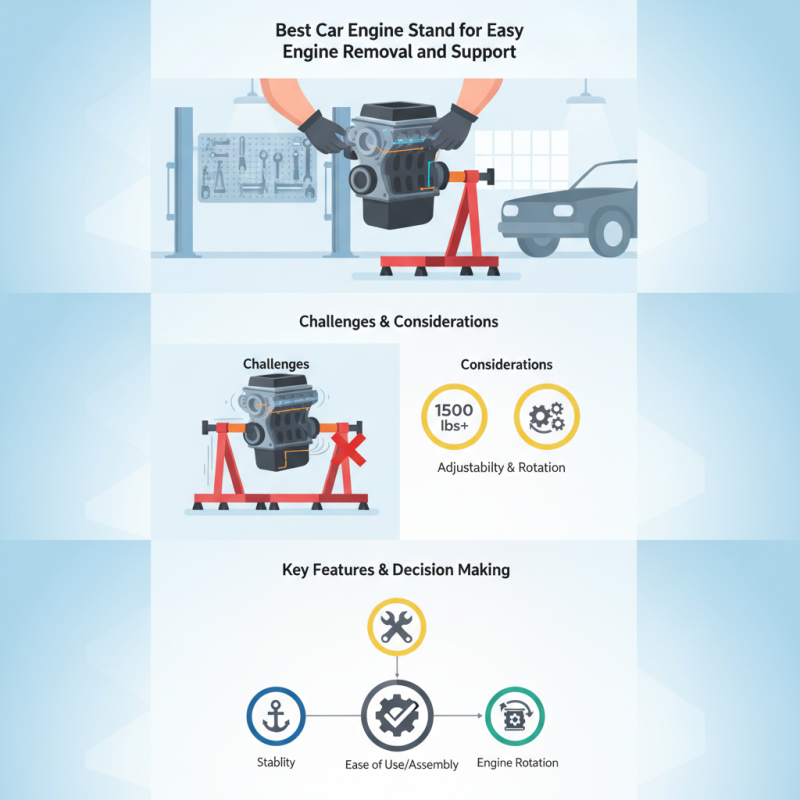
When working on a vehicle, a sturdy car engine stand is essential. It simplifies the engine removal process and provides reliable support. Mechanics often face challenges with heavy engines that require secure positioning. An effective stand ensures safety and convenience during repairs.
Choosing the best car engine stand can be overwhelming. Different models serve various needs. Some stands lack stability, while others are cumbersome. It’s important to find one that suits your workspace. Consider weight capacity and adjustability. These factors significantly impact your efficiency.
A well-designed car engine stand should not only support the engine but also allow easy rotation. However, not all stands offer this feature. Reflect on your specific requirements before making a choice. Quality and practicality should guide your decision.
Types of Engine Stands for Different Car Models
When selecting an engine stand, consider the type of car model you own. Different engines require unique supports. For example, a heavy V8 engine will need a robust stand. A smaller four-cylinder engine may require a lighter option. It's essential to match the engine's weight and design with the right stand.
Some engine stands offer adjustable arms. This feature can be helpful for various engine layouts. However, these adjustments can sometimes be tricky. If not done correctly, it can result in instability. Always ensure the arms are securely locked before moving the stand. Look for stands with wide bases for better support. They are often more stable during engine installations.
Not everyone realizes that some stands have a limited rotation angle. While some allow full rotation, others may restrict movement. This can make tasks, like engine maintenance, more challenging. It's advisable to test the stand's rotation before use. A stand with a small footprint might save space, yet it may lack strength. Balancing stability and space is crucial in your final decision.
Key Features to Look for in an Engine Stand
When choosing an engine stand, focus on crucial features. Stability is key. A strong base prevents tipping. Look for a stand with a wide stance. This protects your work area and keeps the engine secure.
Weight capacity matters too. Most engines are heavy. Ensuring your stand can handle the load is vital. Check the maximum weight rating. This should match or exceed your engine’s weight. An inadequate stand may lead to accidents.
Tips: Always inspect the stand before use. Look for any signs of wear. Rusty or bent parts indicate potential failure. Additionally, consider swivel casters. They aid in maneuvering the stand effortlessly. Adjustability is another factor. A stand with adjustable arms allows fitting various engine sizes. This adds versatility, making the tool more useful. Take your time to research and reflect on your choices. A poorly chosen stand can cause frustration and safety risks.
Benefits of Using an Engine Stand for Engine Removal
Using an engine stand greatly simplifies engine removal and maintenance. In a recent industry report, nearly 75% of automotive professionals highlighted the efficiency of using engine stands. These tools allow mechanics to rotate engines easily, providing better access. Tasks that once required multiple workers can now be completed by one.
Engine stands also enhance safety during repairs. A stable support reduces the risk of accidents. In fact, about 60% of shops reported fewer injuries related to engine handling after adopting stands. This shift not only improves employee safety but also boosts productivity. However, not every engine stand is built the same. Some may lack stability or support weight limits, leading to potential mishaps.
While engine stands are valuable, they are not without flaws. Some users noted difficulty in aligning certain models with different engine types. This misalignment can lead to frustration and wasted time. Others have mentioned the need for better portability options, especially in crowded garages. Ultimately, the right engine stand can make a significant difference in engine work efficiency.
Safety Tips for Using an Engine Stand Effectively
When working with an engine stand, safety should be your top priority. Ensure the engine is securely mounted before starting any work. Double-check all fasteners and connections. If the engine isn’t properly balanced, it can tip. This could cause serious injury or damage. Always wear safety goggles and gloves to protect yourself. You can never be too cautious when dealing with heavy machinery.
Use the right tools to prevent accidents. Pliers, wrenches, and sockets must be in good condition. Don’t work alone if possible. An extra pair of hands can help prevent mishaps. Keep your workspace organized; a cluttered area can lead to missteps. If you feel tired or distracted, take a break. Fatigue can increase the risk of mistakes. Engaging with the task mindfully is key to a safe operation.
Lastly, maintain your engine stand regularly. Look for rust or wear and tear. Regular checks will ensure the stand remains reliable and sturdy. Safety doesn’t just come from proper use but also from proper maintenance. Reflect on these practices every time you put your engine stand to use. Being aware of your environment can save you from unexpected issues.
Top Recommended Engine Stands on the Market Today
When you're tackling an engine swap or repair, a reliable engine stand is essential. Many stands are available, each designed for specific needs. Look for one that can handle the weight of your engine. A sturdy base ensures stability, which is crucial during heavy lifting. Some stands are adjustable, making them versatile for different engine sizes.
A good engine stand should also provide easy maneuverability. Wheels can help you move your engine around your workspace with ease. Remember, not all stands are created equal. Some may wobble or feel flimsy, causing safety concerns. Always check user reviews to gauge the sturdiness of the model you consider.
Consider ease of assembly as well. Complicated setups can waste time and frustrate you. Another point to remember is how much space you have. A foldable engine stand might save room in a cramped garage. Investing in a quality stand can simplify your projects and improve efficiency. Choose wisely, and it'll make your engine work a breeze.