
Download the 2025 Focal Car Catalogue | Focal INSIDE Catalogue | Join our Mailing List!

China Best Wearable Technology Ring Manufacturers

A Wearable Technology Ring can look simple on a fingertip, yet choosing a reliable manufacturer takes closer inspection. Battery life, sensor quality, app support, comfort, and data transparency all shape the daily experience. Small details matter: a raised sensor can catch on a pocket, while a confusing charging case can disrupt a routine. Not every product performs equally well.

Wearable-biosensor researcher Dr. Joseph Wang’s work offers a useful lens for evaluating these devices. A practical principle informed by that research is: “Useful wearable data must be measured consistently and made meaningful to the person wearing it.” This is an editorial summary, not a verified direct quotation. For buyers, that means looking beyond polished product photos and asking how brands test accuracy, explain limitations, and support users after purchase.

This guide to China’s best Wearable Technology Ring manufacturers compares their product capabilities, customization options, production experience, and quality-control practices. It also considers how clearly each supplier communicates specifications and delivery expectations. A low price may be attractive, but it is not proof of dependable performance. Some public claims are hard to verify, and that deserves scrutiny. The right partner depends on your use case, target market, and required level of support. Examine the details before committing.
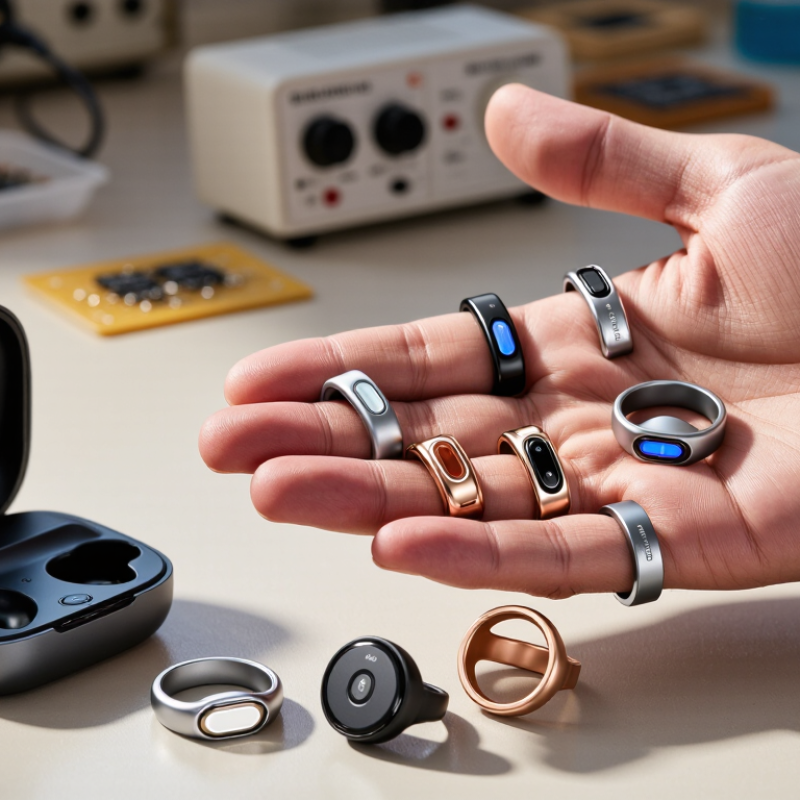
China Best Wearable Technology Ring Manufacturers

Overview of China’s Wearable Technology Ring Industry

China’s wearable technology ring industry is shaped by compact electronics, precision metalwork, and fast-moving product development. Manufacturers often coordinate sensor sourcing, circuit design, molding, surface finishing, and final assembly through connected supplier networks. This proximity can shorten prototype cycles. Small details matter.

A smart ring leaves little room for error. Optical sensors must sit close to the skin, while the inner surface needs smooth edges and consistent sizing. Engineers test readings during movement, check charging contacts, and examine how coatings tolerate sweat and daily wear. Battery capacity remains a practical constraint. Smaller cells improve comfort but may reduce time between charges.

The industry serves different development needs, from private-label production to custom hardware and software integration. Buyers should review sample quality, measurement methods, production records, and post-delivery support instead of relying only on polished specifications. Testing can vary between factories, and a promising prototype may behave differently in larger batches. That is worth asking about. Sensor accuracy, comfort, and battery life continue to improve, but no single design balances them perfectly.

Key Features and Technologies in Smart Rings

Smart rings combine compact sensors with low-power electronics, making fit a technical requirement, not just a comfort issue. A loose ring can weaken optical pulse readings during sleep or exercise. Photoplethysmography sensors track pulse patterns, while accelerometers capture movement and restlessness. Some models also measure skin temperature, which may help identify personal changes over time. These readings are estimates, not medical diagnoses.

Fit matters.

Battery life depends on sensor activity, software, and ring size. A smaller battery must support continuous tracking without making the ring bulky. Water resistance, durable materials, and easy charging also shape daily use. Grand View Research estimated the global smart ring market at USD 314.5 million in 2023 and projected a 24.1% compound annual growth rate from 2024 to 2030. That forecast signals interest, but market growth does not prove that every feature is useful. Buyers and manufacturers should consider data privacy, too: health metrics can feel personal, even when they are imperfect. A practical design balances readable measurements, secure data handling, and comfort through a full night’s sleep.

How Wearable Ring Manufacturers Design and Produce Devices

Designing a wearable ring begins with a difficult compromise: the device must fit comfortably while making room for sensors, a battery, and wireless components. Manufacturers measure finger sizes and test several inner shapes, because a small change in curvature can affect comfort over a full day. Fit matters. Early prototypes help teams check weight, surface finish, and whether the ring catches on clothing.

Engineers arrange optical sensors against the skin and tune their position to reduce gaps and movement. The outer shell may be shaped from metal or another durable material, then joined with an inner structure that protects the electronics. Production teams inspect sensor alignment, charging contacts, and sealing before assembly moves forward. Tiny parts leave little room for correction. A prototype that works on a workbench may still feel bulky during exercise or sleep.

Quality checks usually combine measurements with repeated wear tests. Teams can compare sensor readings under different lighting and motion conditions, while checking battery performance and charging behavior. Each production batch also needs consistent sizing and surface quality. Manufacturing is not perfectly predictable; coatings, fit, and readings can vary slightly. That is why practical feedback from testers matters, even when it sends a design back for another adjustment.

Criteria for Evaluating Chinese Smart Ring Manufacturers

Choosing a Chinese smart-ring manufacturer requires more than reviewing a sleek sample. IDC reported 534.6 million wearable-device shipments worldwide in 2024, up 6.1% year over year. That broad growth signals opportunity, not quality. Ask suppliers for repeatable test results covering heart-rate readings, sleep tracking, battery life, and skin-contact materials. Request test conditions, sample sizes, and failure rates—not just a demonstration on one person.

Production evidence matters. Review audit records, incoming-material checks, assembly tolerances, and defect data from recent batches. Ask how the factory tests water resistance after repeated charging and daily wear. Bluetooth SIG’s 2024 Market Update projects more than seven billion Bluetooth device shipments annually by 2028, making connection stability and interoperability practical evaluation points. Still, shipment forecasts cannot prove that one supplier’s ring performs reliably. That distinction is easy to miss.

Check whether the manufacturer can explain data handling, firmware updates, and support for returned units. Request a pilot batch and compare measurements across several ring sizes and users. I would also inspect packaging and charging contacts; small flaws can disrupt everyday use. One limitation remains: supplier documents may be incomplete or difficult to compare. Record unanswered questions, then verify key claims through independent testing before committing to volume orders.

Criteria for Evaluating Chinese Smart Ring Manufacturers

Suggested buyer-evaluation weights (%) across practical sourcing criteria. These are guideline weights, not measured scores or rankings of manufacturers.

Prioritize evidence of sensor performance and validation, then assess battery life, comfort and materials, privacy practices, quality controls, regulatory compliance, and integration options. Adjust the weights to match your product requirements.

Manufacturer Profiles, Product Specialties, and Export Capabilities

A useful profile of a wearable technology ring manufacturer should explain its production experience, engineering resources, and quality checks. Look for details on sensor integration, battery testing, water-resistance evaluation, and assembly capacity. A clear description is more informative than a long list of products. Request sample units and inspect their fit, finish, charging method, and consistency between samples.

Product specialties may include sleep tracking, activity measurement, temperature sensing, or companion-app development. Check whether the manufacturer designs these features in-house or relies on outside partners. Ask how it verifies sensor performance and manages firmware updates. A polished catalog is not proof of production capability. Some supplier profiles leave important gaps, so verify claims with current specifications, factory documentation, and direct technical discussions.

Export capability involves more than shipping. Ask about destination-specific packaging, labeling support, lead times, spare parts, and after-sales processes. Confirm which export documents the supplier can provide for your shipment and market. Details matter. Tip: Request a written sample plan, production timeline, and quality checklist before placing a large order. Compare replies carefully; vague answers may signal a need for further review.

China Best Wearable Technology Ring Manufacturers - Manufacturer Profiles, Product Specialties, and Export Capabilities

The profiles below describe common manufacturer capability types in China’s smart-ring supply chain. They are anonymized industry-level examples, not verified profiles of specific companies. Product specifications, certifications, and export readiness vary by supplier and should be confirmed directly.

Manufacturer Profile Type Typical Product Specialty Common Technical Capabilities Typical Customization Scope Export and Compliance Considerations Buyer Checks
Health-tracking focused Rings designed to collect wellness metrics such as movement, sleep-related data, and heart-rate readings, depending on the sensor configuration. Compact sensor integration, Bluetooth Low Energy connectivity, rechargeable batteries, and companion-app data transfer are common design elements. Exterior finish, sizing, packaging, app localization, and selected feature configuration may be negotiable. Wireless and battery requirements depend on the destination market. Request applicable test reports and confirm whether the supplier or importer is responsible for local compliance. Check sensor performance evidence, app compatibility, data handling practices, battery runtime test conditions, and support for software updates.
Compact electronics specialist Small-form-factor rings prioritizing miniaturized electronics, low power consumption, and a lightweight design. PCB and component miniaturization, antenna integration, battery packaging, and assembly of small electronic modules. Mechanical dimensions, materials, colors, and selected electronic components may be customizable subject to engineering review and order quantity. Export documentation and product-marking requirements vary by destination and product configuration; obtain a market-specific compliance plan before shipment. Review sample consistency, assembly yield, charging method, antenna performance, and the supplier’s process for handling design changes.
Metal and jewelry-style fabricator Rings emphasizing appearance and wearability, with metal or coated exteriors around an electronic core. Metal forming or finishing, surface treatment, size control, and coordination between the outer shell and internal electronics. Shape, surface finish, color, size range, and packaging are typical discussion points; material and coating claims require verification. Confirm material declarations and any destination-market restrictions relevant to coatings or skin-contact materials. Do not assume a finish is hypoallergenic without supporting evidence. Request material specifications, coating durability results, dimensional tolerances, and wear or corrosion test information.
ODM product developer Existing ring platforms that can be adapted for a buyer’s product brief, software requirements, or sales channel. Platform-based hardware development, firmware configuration, sample iteration, and coordination with app or cloud-service providers. Customization may include logo-free or private-label packaging, interface language, selected features, and appearance; scope depends on platform and contract. Clarify intellectual-property ownership, software licensing, data hosting, warranty terms, and responsibility for destination-market approvals. Review the development schedule, minimum order quantity, tooling costs, source-code or API access, and post-launch technical support.
Assembly and contract-manufacturing partner Production and assembly of ring products using buyer-specified designs, components, or approved product platforms. Component sourcing, assembly, inspection, functional testing, and packaging operations may be available, depending on factory equipment and quality systems. Customization follows the buyer’s drawings, bill of materials, test criteria, and packaging specifications. Confirm export experience for the intended destination, shipping terms, document preparation, traceability, and responsibility for product conformity. Audit quality controls, incoming inspection, production records, defect handling, capacity planning, and subcontracting arrangements.

Before placing an order, request current product specifications, samples, applicable test documentation, manufacturing and warranty terms, and written confirmation of export responsibilities for the target market.