
Download the 2025 Focal Car Catalogue | Focal INSIDE Catalogue | Join our Mailing List!

China Top 10 Interactive Game Wall Manufacturers

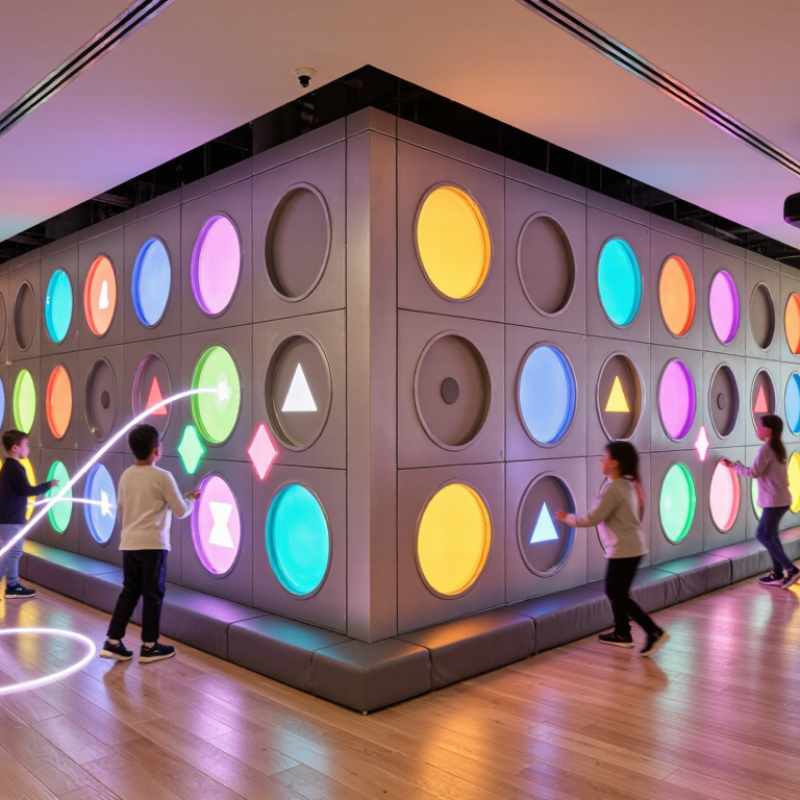
An Interactive Game Wall turns a blank surface into an active play space. Children tap glowing targets, follow projected paths, and race to catch virtual shapes. In schools, family venues, and indoor play centers, these systems combine projection, sensors, software, and durable installation hardware.

China has a broad supplier base, but a strong demo does not guarantee a dependable installation. This guide to China’s top 10 Interactive Game Wall manufacturers is designed to help buyers compare capabilities, not just glossy product images. It considers game libraries, sensor response, customization, safety-minded design, installation support, and after-sales service. Ask for a live demonstration. Check how the system performs under bright room lighting, with several players moving at once, and after repeated daily use.

Play matters beyond the screen. Psychiatrist and play researcher Stuart Brown wrote, “The opposite of play is not work—the opposite of play is depression.” His observation concerns play broadly, not interactive walls specifically, but it underscores why thoughtful design should invite movement and shared attention. A responsive wall can encourage both. Still, no ranking can replace a site visit, reference check, or clear service agreement. Product details change, and public information is not always complete. That limitation deserves attention. Use this overview as a starting point, then verify specifications directly with each manufacturer before making a decision.
China Top 10 Interactive Game Wall Manufacturers

What Interactive Game Walls Are and How They Work

What Interactive Game Walls Are and How They Work

An interactive game wall is a large display that turns movement or touch into game input. Players might tap a glowing target, dodge a falling shape, or follow a moving trail. The system usually combines a screen, sensors or cameras, game software, and speakers. Sensors detect a player’s position or gesture, then software translates that input into an on-screen action. A target flashes. Someone steps left. The image responds. The delay should feel small. Calibration matters: even a slight tracking error can make a simple game feel clumsy.

Grand View Research’s 2024 Interactive Display Market report valued the broader market at USD 42.86 billion in 2023. It projected an 8.1% compound annual growth rate through 2030. This figure includes more than game walls, so it should not be read as a game-wall sales forecast. Room lighting, viewing distance, reflective surfaces, and crowd size can all affect sensor performance. Installers should test the actual space, not just rely on product specifications. A polished demo can be misleading; real play is messier. Clear floor space and quick, readable feedback often matter as much as impressive graphics.

China’s Interactive Game Wall Manufacturing Industry

China’s interactive game wall manufacturing industry sits between display engineering, software development, and commercial play equipment. Manufacturers typically combine large touchscreens or projection surfaces with motion sensors, embedded computers, speakers, and content systems. A wall may look simple in a venue, yet reliable performance depends on touch accuracy, low response delay, sturdy mounting, and easy-to-clean surfaces. Small calibration errors can make a game feel frustrating.

Demand has a wider digital-gaming context. The China Audio-Video and Digital Publishing Association’s 2024 China Game Industry Report recorded 325.783 billion yuan in domestic game sales revenue and 674 million players. These figures describe the overall gaming market, not interactive game wall sales; treating them as direct market-size evidence would be misleading. That gap matters. For buyers, practical checks include screen brightness under venue lighting, sensor performance with several players, spare-part availability, and software update procedures. Manufacturers should also test equipment after long operating hours, not only during short demonstrations. One weakness remains: product comparisons rarely publish consistent durability data. More transparent testing would help venues assess long-term costs, rather than choosing by appearance alone.

Criteria for Evaluating Interactive Game Wall Manufacturers

When evaluating interactive game wall manufacturers, look beyond bright demonstrations. Ask how the wall responds to different heights, movement speeds, and room lighting. A reliable system should track a child’s quick reach without reacting to every shadow. Request a live test, not only a polished video. Watch for delayed feedback, missed touches, and distracting glare.

Build quality matters just as much. Check the projected image from several standing positions, and inspect how cables, sensors, and wall mounts are protected. Ask what surfaces are supported and how calibration works after a room change. Good documentation should explain setup in clear steps. Small details matter. A loose cable cover can become a maintenance problem. Confirm that software updates, spare parts, and technical support are available, with response times stated in writing. Ask for references from installations with similar room sizes and daily usage. If a supplier cannot explain expected upkeep in practical terms, that deserves another question. No system is maintenance-free, and claims of perfect accuracy should be tested under ordinary conditions. A simple trial with several users can reveal more than a long feature list.

China Top 10 Interactive Game Wall Manufacturers - Criteria for Evaluating Interactive Game Wall Manufacturers
No. Evaluation Criterion Suggested Weight What to Evaluate Evidence to Request
1 Product Safety and Compliance 15% Electrical safety, power-supply specifications, materials, installation requirements, and applicable certifications for the destination market. Current test reports or certificates, component specifications, safety instructions, and destination-market compliance documentation.
2 Interactive Performance 12% Touch or motion-tracking responsiveness, recognition accuracy, multi-user support, and performance under the intended lighting and usage conditions. Live demonstration, technical specifications, and a test using the intended room layout and typical user group.
3 Hardware and Image Quality 12% Display or projection resolution, brightness, contrast, audio output, operating temperature, and suitability for the installation environment. Hardware datasheets, measured specifications, component list, and sample installation images or video.
4 Game Content and Customization 10% Game variety, age suitability, language options, content update process, and ability to tailor visuals or gameplay to a venue’s needs. Current game catalogue, content licensing details, customization examples, and update policy.
5 Reliability and Durability 10% Expected operating hours, component service life, resistance to frequent public use, and system stability during continuous operation. Written operating specifications, warranty terms, maintenance schedule, and available reliability or endurance-test records.
6 Installation and Integration 10% Space and power requirements, installation complexity, calibration process, and compatibility with venue networks or other equipment. Site-preparation checklist, installation drawings, network requirements, and a description of commissioning and calibration steps.
7 After-Sales Support 8% Technical support availability, response channels, troubleshooting assistance, spare-parts access, and remote diagnostic capability. Support policy, service hours, response-time commitments, escalation process, and spare-parts availability information.
8 Warranty and Maintenance 8% Warranty duration and coverage, exclusions, repair procedures, software support, and ongoing maintenance costs. Written warranty, maintenance plan, replacement-part pricing, and details of software updates during and after the warranty period.
9 Delivery and Project Management 8% Production and delivery schedule, packaging for transport, export documentation, project communication, and handling of schedule changes. Project timeline, packaging details, shipping responsibilities, export-document checklist, and a named project contact.
10 Total Cost and Commercial Clarity 7% Full cost of ownership, including equipment, software, customization, shipping, installation, training, maintenance, and any recurring fees. Itemized quotation, payment terms, recurring-fee schedule, delivery terms, and written scope of included services.

Suggested use: Score each criterion from 1 to 5, where 1 means insufficient evidence or performance and 5 means strong, documented performance. Multiply each score by its suggested weight to compare shortlisted suppliers. The weights are an evaluation framework, not verified ratings of any specific manufacturer.

Profiles of 10 Leading Interactive Game Wall Manufacturers in China

Profiles of ten leading interactive game wall manufacturers in China offer a practical way to compare products, production strengths, and support. A useful profile looks beyond bright graphics. It considers sensor response, image clarity, cabinet construction, and how quickly staff can reset a game. Small details matter. A delayed touch can frustrate children in a busy play area.

The manufacturers covered may differ in their core strengths. Some focus on projection-based walls for flexible layouts; others build fixed panels with contact sensors and rugged surfaces. Several may support custom game themes, while others emphasize standard configurations and easier installation. Buyers should ask about calibration, replacement parts, warranty terms, and performance in rooms with strong daylight. These questions make a sales demonstration more revealing.

A convincing profile also notes what is not clearly documented. For example, advertised response times may not reflect performance after months of heavy use. Request a live demonstration, and test several touch points across the screen. Ask who handles software updates and on-site troubleshooting. The comparison is not always tidy, but that uncertainty deserves attention. A wall that looks impressive in a showroom still needs dependable service in daily operation.

Comparing Manufacturers by Products, Technology, and Services

When comparing China’s top 10 interactive game wall manufacturers, look beyond product photos. Check whether each offers projection, touch, or motion-tracking systems, and whether these suit your room size and visitor age. For example, a 4-meter wall in a school needs different calibration from one in a busy family venue. A short demo helps.

Technology claims need practical checks. Ask for measured response time, tracking accuracy, supported content formats, and update procedures. Request a live test with several players moving across the screen. Numbers matter, but test conditions should be clear. A bright showroom can hide glare problems that appear under ordinary ceiling lights. No comparison is perfect.

Service quality can shape daily operating costs. Compare installation plans, staff training, spare-part access, warranty terms, and remote troubleshooting hours. Ask how quickly the supplier handles a failed sensor or a projector that loses alignment. That gap matters. Some proposals describe support broadly, yet omit response times; ask for these details in writing. It is easy to overvalue a long feature list. I would still check how easily local staff can restart the system, clean sensors, and add approved games without calling an engineer.