How to Choose the Best Audio System for Your Car?
Choosing the best audio system for your car is a critical task. It can transform your driving experience. A high-quality car audio system enhances clarity and depth. This piece will guide you through the essentials of selecting an ideal audio system.
Consider your preferences and driving habits. Some prioritize booming bass, while others seek crystal-clear vocals. Knowing what matters to you makes a difference. It's also vital to think about compatibility with your vehicle. Not all audio systems fit every car model seamlessly.
Installation can be a daunting task if you're not skilled. Hiring a professional may be necessary for the best results. We will explore different features, including speakers, amplifiers, and receivers. Understanding these components can help you make an informed choice. Remember, investing in a good audio system is worthwhile, but reflection on personal needs is key.
Understanding Your Audio Needs and Preferences
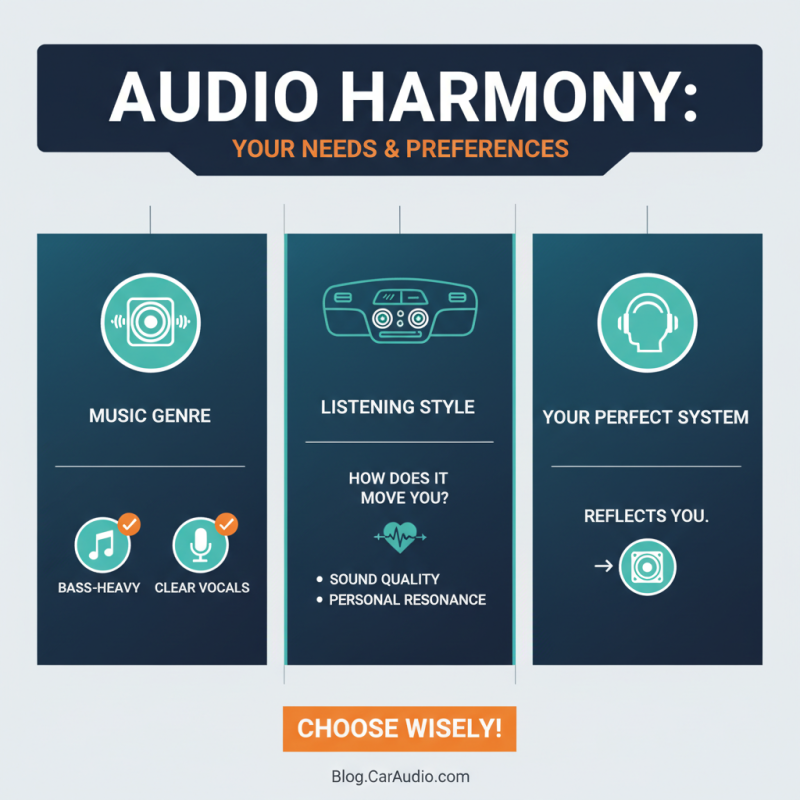
When choosing an audio system for your car, it’s crucial to understand your unique audio needs and preferences. Consider what genres of music you enjoy most. Do you prefer bass-heavy songs or clear vocals? The right audio system should reflect your listening style. It's not just about sound quality; it’s about how the music resonates with you personally.
Think about the environment in which you'll be listening. Are you often in noisy traffic? A system that cancels noise could enhance your experience. You may also want a user-friendly interface. This can allow easy access to various features. Reflect on what matters most to you, as there is no one-size-fits-all solution. Distinguishing between essential features and the ones you can live without can be a challenge.
Don’t overlook the installation process. This can be tricky for those unfamiliar with audio systems. A professional installation ensures optimal performance. However, some DIY enthusiasts might want to tackle this themselves. This can lead to potential mistakes, especially if not well-planned. Balancing your personal touch with expert guidance can lead to a satisfying outcome.
Exploring Different Types of Car Audio Systems
When exploring car audio systems, it's essential to understand the different types available. Most systems fall into three categories: factory-installed, aftermarket, and custom installations. Factory-installed systems often lack in sound quality and tuning capabilities. While they may be convenient, they rarely satisfy serious audiophiles or enthusiasts.
Aftermarket systems provide an excellent upgrade. They come in various setups, from simple speakers to complex multi-component systems. A well-curated aftermarket system can improve clarity and bass response significantly. Yet, installation can be complicated. Not every enthusiast feels confident in installing equipment, leading to potential performance issues.
Custom installations represent the pinnacle of car audio systems. They are tailored to individual preferences and vehicle acoustics. While they offer the best sound quality, they require an investment of time and resources. This route might not be for everyone. Reflecting on specific needs and preferences before deciding is crucial. Maybe you seek sound clarity or booming bass. Defining these priorities helps in making a better choice.
How to Choose the Best Audio System for Your Car?
The following bar chart illustrates the popularity of different types of car audio systems based on user preferences. The data showcases the preferences for various audio systems among car owners.
Key Features to Look for in an Audio System
When selecting an audio system for your car, consider essential features to enhance your listening experience. Sound quality is paramount. Look for systems with a high signal-to-noise ratio (SNR), typically above 90 dB. This measure indicates how clean the audio signal is, minimizing unwanted noise. Additionally, systems should have a frequency response of 20 Hz to 20 kHz, ensuring they can accurately reproduce lows and highs.
Next, connectivity is crucial. A good system should support Bluetooth, USB, and aux connections. Statistics show that 70% of drivers prefer streaming music via Bluetooth. Having multiple connectivity options allows for flexibility in listening. Moreover, consider the equalizer settings. An adjustable equalizer is vital for tailoring sound to your preferences. Research indicates that customized sound profiles can significantly enhance your listening satisfaction.
Incorporating features like smartphone integration can make a big difference. Systems compatible with Android Auto and Apple CarPlay allow for seamless access to apps and navigation. However, be aware that some systems may become outdated quickly in terms of software support. Upgradability should also be a consideration. Without proper updates, your system may fall behind in functionality. Balancing these features with your budget is essential to choose the best audio system for your vehicle.
How to Choose the Best Audio System for Your Car? - Key Features to Look for in an Audio System
| Feature |
Description |
Importance |
| Sound Quality |
Clear and balanced sound with good bass response. |
Essential for an enjoyable listening experience. |
| Power Output |
Measured in watts, higher output delivers louder sound. |
Important for clarity at higher volumes. |
| Connectivity Options |
Bluetooth, USB, AUX input for flexibility. |
Highly valued for modern audio streaming. |
| Built-in Equalizer |
Adjusts frequency response to suit preferences. |
Enhances personalization of audio settings. |
| Size and Fit |
Compatibility with car's dashboard and available space. |
Crucial for installation and aesthetics. |
| Speaker Quality |
Quality of the speakers impacts overall sound output. |
Directly affects audio clarity and performance. |
| User Interface |
Ease of use of controls and display functionality. |
Important for safe driving and convenience. |
Installation Considerations for Your Car Audio Setup
When installing a car audio system, there are several important considerations. Choosing the right location for speakers is essential. Ideally, speakers should be positioned for optimal sound distribution. Think about the space to avoid vibrations and rattles. It’s easy to overlook this detail, yet it greatly impacts sound quality.
Wiring and connections play a significant role in the installation process. Poor quality connections can result in signal loss. A solid connection ensures clear audio without interruptions. Double-checking your wiring can save you frustration later on. Consider that mistakes in this area can impact performance negatively.
The power source also deserves attention. Ensure the audio system is compatible with your car’s electrical system. An underpowered system may struggle to produce quality sound. Reflect on whether your battery can handle the extra load. Proper planning in this aspect will prevent issues during and after installation. Consider seeking expert advice if you're unsure about any steps.
Budgeting for Your Ideal Car Audio System
When budgeting for your ideal car audio system, it's crucial to define your needs. According to a recent industry report, approximately 60% of car owners prioritize sound quality over price. This highlights the importance of finding a balance between high performance and affordability. Establishing a realistic budget can prevent overspending on features you may not need.
Evaluate how much you're willing to invest. Entry-level systems can start around $200, while premium setups may exceed $1,000. An essential tip is to allow for installation costs, which can range from $100 to $200. DIY installation can save money but may not yield optimal results. Quality sound often requires professional expertise.
Consider various audio components. Speakers should provide clarity and depth. Subwoofers enhance bass, making genres like hip-hop or rock more enjoyable. A study found that 70% of users felt dissatisfied with cheaper systems lacking adequate sound tuning. Take time to research various features and read user reviews. This helps to avoid costly mistakes. Prioritize what matters most to you, whether it’s functionality or aesthetics.