How to Choose the Best Car Sound System for Your Needs?
Choosing the right car sound system can significantly enhance your driving experience. Many options cater to different preferences, budgets, and styles. A car sound system affects how you enjoy music, podcasts, and navigation.
When selecting a system, consider factors like sound quality, installation complexity, and compatibility with your vehicle. Some people may prioritize bass, while others seek clarity in vocals. Finding a balance can be challenging. You might face confusion in choosing brands and models.
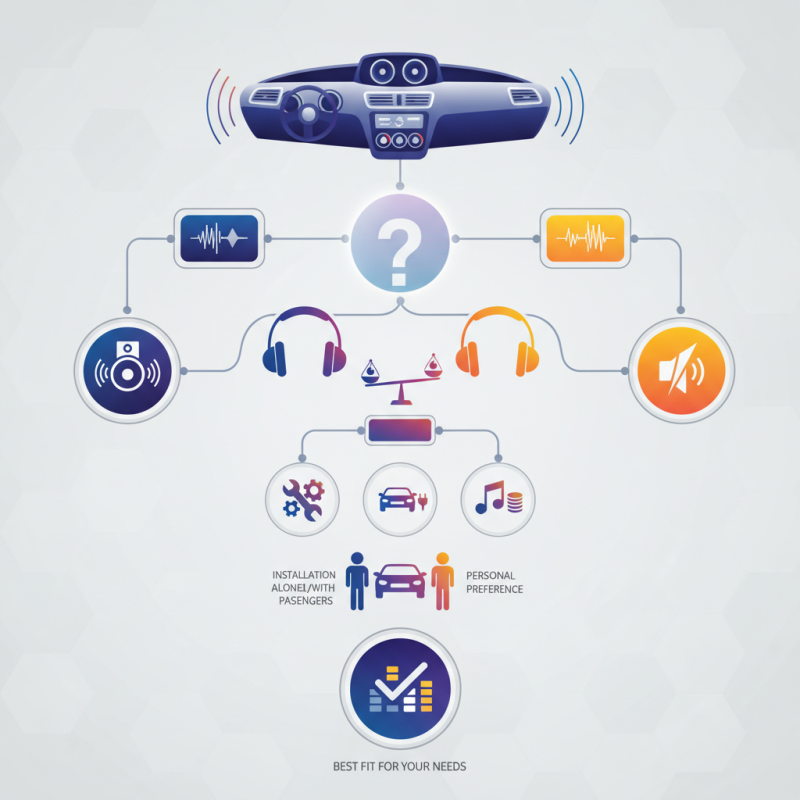
Personal preferences play a crucial role in this process. Assess your audio habits and how often you use your system. Additionally, reflect on whether you often drive alone or with passengers, as this can influence your decision. A great sound system may not be about the highest price; it’s about what best fits your needs.
Factors to Consider When Choosing a Car Sound System
When choosing a car sound system, several factors come into play. Sound quality is paramount. According to industry studies, nearly 70% of consumers prioritize audio clarity. Look for systems that provide balanced sounds and deep bass. A well-rounded speaker system should include tweeters for high frequencies and woofers for low-end sounds. This combination enhances listening experiences, making every drive enjoyable.
Consider the power handling of the system, measured in watts. Systems with higher wattage often produce louder sound without distortion. A report from the Consumer Electronics Association indicates that average car speakers should handle at least 50 watts for best performance. Additionally, compatibility is essential. Ensure that your chosen system fits your vehicle's make and model. Research shows that improper fitment is a common issue that leads to dissatisfaction.
Installation plays a critical role in the performance of your car sound system. Professional installation can optimize sound quality but can also add to costs. Some users report that DIY installations often result in subpar performance. Assess your comfort level with installation before making decisions. It's important to strike a balance between quality, expenses, and your specific needs.
How to Choose the Best Car Sound System for Your Needs? - Factors to Consider When Choosing a Car Sound System
| Factor |
Description |
Importance Level |
Ideal Features |
| Sound Quality |
The clarity and balance of audio produced by the system. |
High |
Full-range speakers, subwoofers, audio tuning capabilities. |
| Power Ratings |
The amount of power (in watts) that the system can handle. |
Medium |
Higher wattage for better sound at higher volumes. |
| Connectivity Options |
Available methods for connecting devices (Bluetooth, AUX, USB). |
High |
Bluetooth, USB ports, smartphone integration. |
| Ease of Installation |
How simple it is to install the sound system in your vehicle. |
Medium |
Pre-wired harnesses, plug-and-play options. |
| Budget |
The price range you are willing to spend on a sound system. |
High |
Affordable options and high-end features. |
| User Reviews |
Feedback from other users regarding the system performance. |
Medium |
Positive ratings, detailed reviews on sound quality. |
Types of Car Sound Systems and Their Benefits
When selecting a car sound system, understanding the types available is crucial. You can choose from several categories:
coaxial,
component, and
subwoofer systems.
Each has unique benefits tailored to different audio preferences.
Coaxial speakers are all-in-one units. They are convenient and space-saving.
Reports show that about 40% of users prefer coaxial systems for their ease of installation.
Component systems, on the other hand, offer separate speakers and tweeters. They provide higher sound quality with clearer separation of audio frequencies.
This type is favored by audiophiles. According to industry data,
30% of car enthusiasts invest in component systems for their superior performance.
However, they require more space and effort during installation.
Subwoofers enhance deep bass sounds, ideal for genres like hip hop or electronic music. While they add a powerful punch, many forget the importance of balance.
Too much bass can overshadow mids and highs. Reports indicate that improper tuning can lead to a less desirable listening experience.
Thus, finding harmony in your setup is essential.
Car audio can be a rewarding journey, but it requires thoughtful consideration of your needs and preferences.
Assessing Your Budget for a Car Sound System Upgrade
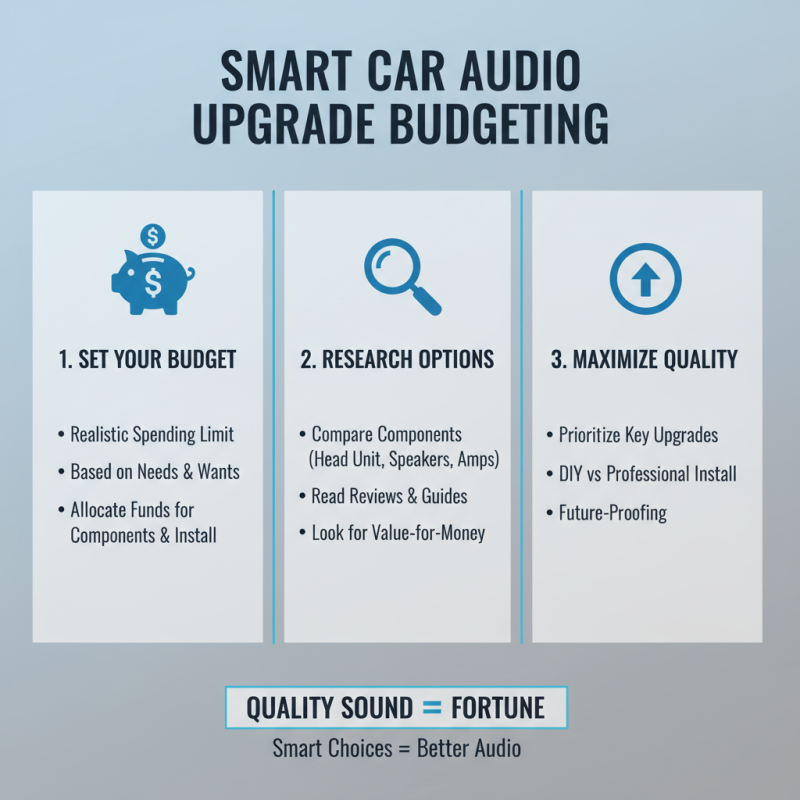
When upgrading your car sound system, budgeting is key. You might think you need to spend a fortune to get quality sound, but that's not always true. Researching your options is essential. Set a realistic budget based on your needs and preferences. Consider how much you're willing to invest for better audio.
Many options exist within various price ranges. A decent system may cost a few hundred dollars. Higher-end systems can go into the thousands. Reflect on what features truly matter to you. Do you want deep bass, clear vocals, or Bluetooth connectivity? Sometimes, it's about striking a balance between quality and cost.
It's also worth thinking about installation. Professional installation adds to the cost. If you're comfortable, you might try a DIY approach. Understand your capability before diving in. Remember, it’s easy to overspend when you're excited. Stay focused on your budget to avoid regrets later. Having this structure will help you enjoy the music, without financial stress.
Understanding Components: Speakers, Subwoofers, and Amplifiers
When choosing a car sound system, understanding the components is crucial. Speakers are the heart of your audio experience. They convert electrical signals into sound. You need to consider their size and type. Larger speakers often produce deeper, richer sounds. However, they can demand more power. Smaller speakers might fit your space better, but they may lack bass response.
Subwoofers are important for deep bass. They handle low frequencies that standard speakers often struggle with. A good subwoofer can dramatically enhance the overall sound experience. However, installing a subwoofer can be tricky. It requires space and power. Think about how much room you have. Sometimes, the best quality is lost in the struggle for space.
Amplifiers boost the sound signals. They are responsible for providing the power needed for speakers and subwoofers to perform at their best. Choosing the right amplifier can make or break your system. A mismatch between your speakers and amplifier can lead to disappointing audio. Ensure they work well together. This balance is key, but it can be challenging to achieve. Remember that the goal is clarity and fullness in sound, so take your time during the selection process.
Installation Options: DIY vs. Professional Installation
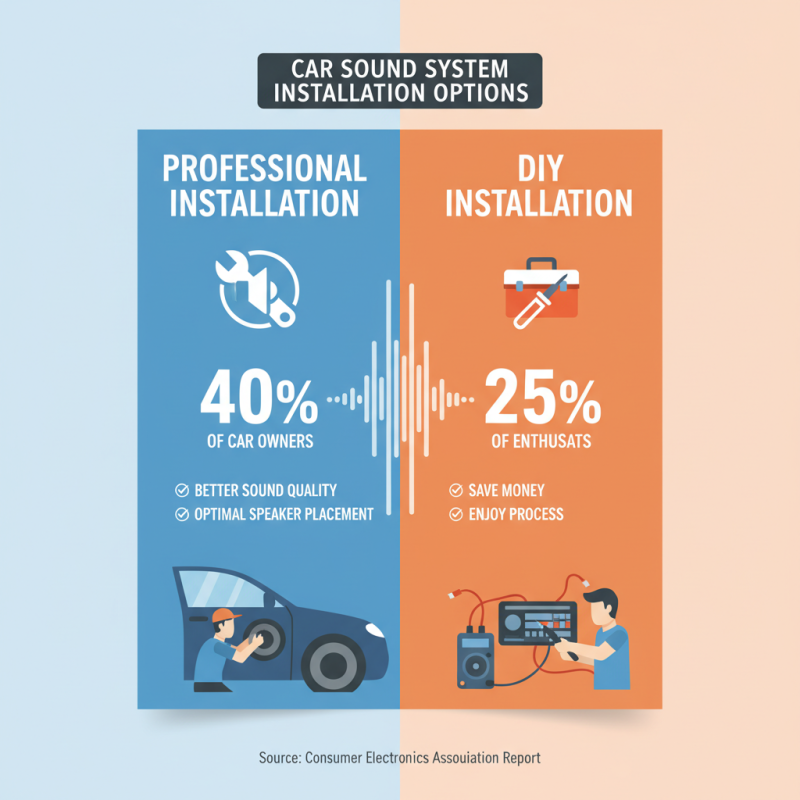
When considering the installation of a car sound system, two main options emerge: DIY and professional installation. A recent report from the Consumer Electronics Association reveals that nearly 40% of car owners opt for professional help. This choice often leads to better sound quality and optimal placement of speakers. However, DIY installation attracts about 25% of enthusiasts who seek to save money and enjoy the process.
DIY installations can provide a sense of accomplishment. You learn about your car’s audio system and how each component works. But without experience, mistakes are easy to make. Wiring errors or improper speaker placement can drastically reduce sound quality. In some cases, poorly installed systems end up costing more for repairs later on.
Professional installation also carries its own risks. The cost can range from $100 to $500, depending on services. While you save time, there's also less control over the final look and feel of your sound system. Some might feel that a shop doesn’t capture their vision for custom sound, leading to dissatisfaction. Ultimately, personal preference and budget play crucial roles in choosing the right path for your needs.