How to Choose the Best Car Speakers for Ultimate Sound Quality
When it comes to enhancing your driving experience, the quality of your audio system plays a pivotal role. Selecting the right car speakers is crucial for achieving the ultimate sound quality that can make your journeys more enjoyable, whether you are commuting to work or embarking on a road trip. With countless options available in the market, it’s essential to understand the key factors that contribute to superior sound performance in car speakers, allowing you to make an informed decision that aligns with your preferences and needs.
To start, it's important to consider the various types of car speakers available, including coaxial and component speakers, as each type offers distinct advantages and sound characteristics. Additionally, factors such as speaker size, power handling, and sensitivity can greatly influence the overall sound output and clarity. By investigating these elements, you can identify the speakers that best suit your automotive environment and personal listening habits.
As we dive deeper into the process of selecting the best car speakers, we will explore essential features and specifications to look for, tips for installation, and the impact of proper tuning. This comprehensive guide aims to empower you to elevate your audio experience and transform your vehicle into a sonic haven, ensuring every ride is accompanied by the remarkable sound quality you deserve.
Understanding Sound Quality Metrics in Car Speakers
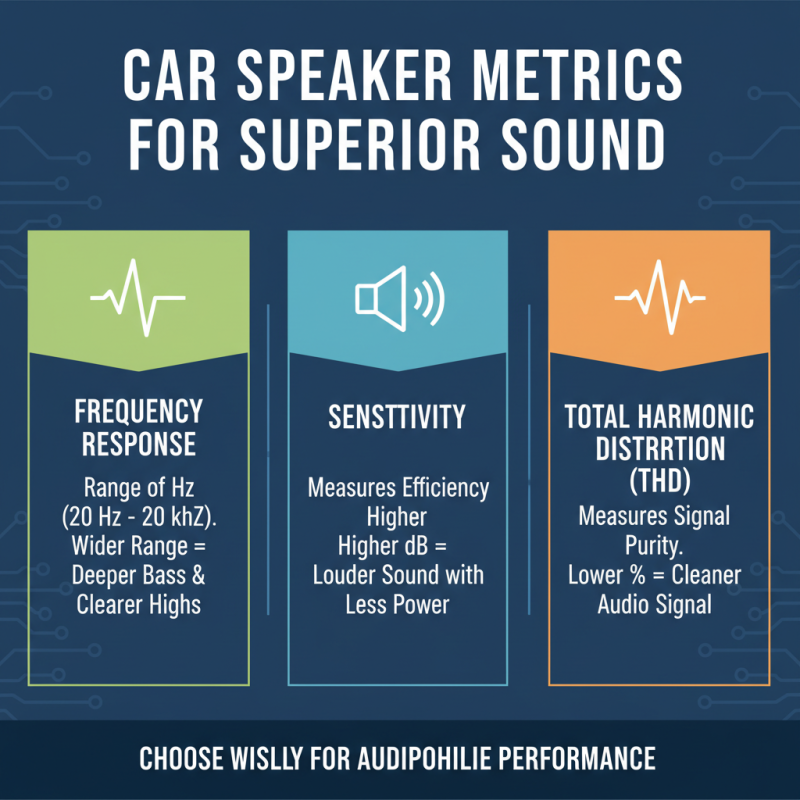
When choosing car speakers for optimal sound quality, it's essential to understand the different metrics that define audio performance. Key metrics include frequency response, sensitivity, and total harmonic distortion (THD). Frequency response describes the range of sound frequencies a speaker can reproduce, typically measured in Hertz (Hz). A wider frequency range—usually between 20 Hz and 20 kHz—is indicative of a speaker's ability to reproduce deeper bass and clearer highs, both crucial for a rich audio experience. Industry studies suggest that a frequency response range that covers this spectrum is vital for achieving high-fidelity sound.
Sensitivity, measured in decibels (dB), quantifies how effectively a speaker converts power into sound. Higher sensitivity ratings (above 90 dB) indicate that less power is required to produce the same volume, making these speakers more efficient. According to a report from the Consumer Electronics Association, sensitivity impacts overall sound output, with significant variations between standard and high-efficiency models impacting the listening experience. Furthermore, total harmonic distortion should ideally be kept below 1% for clearer sound reproduction, as higher levels can lead to a muddled audio output. When evaluating car speakers, understanding these sound quality metrics can significantly enhance the listening experience, allowing enthusiasts to enjoy their music as intended by the artists.
Types of Car Speakers: Coaxial vs. Component
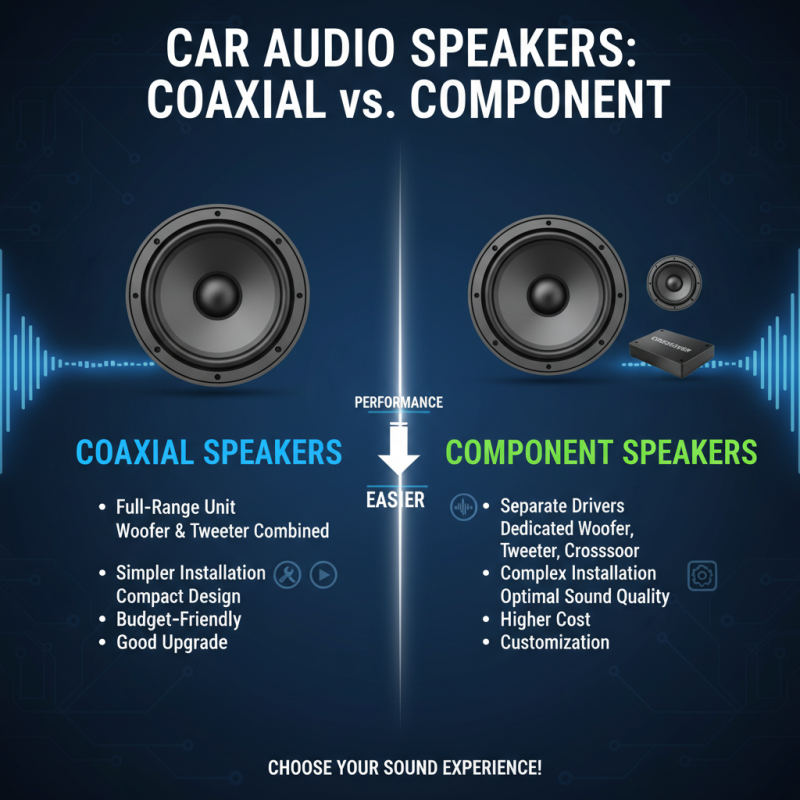
When it comes to upgrading your car audio system, understanding the differences between coaxial and component speakers is crucial for achieving the ultimate sound quality. Coaxial speakers, often referred to as full-range speakers, combine multiple speaker elements into a single unit. This design typically includes a woofer for bass and a tweeter for high frequencies, allowing them to deliver a full spectrum of sound. Coaxial speakers are generally easier to install and more compact, making them a popular choice for those who want a straightforward upgrade without extensive modifications to their vehicle.
On the other hand, component speakers offer a more advanced setup by separating the woofer and tweeter, allowing for better sound staging and clarity. Because the tweeter can be mounted in a more optimal location for high-frequency sound, component systems often produce a more detailed and immersive audio experience. Additionally, component speakers usually come with external crossovers, which help manage the frequency distribution between the drivers for enhanced performance. Despite being more complex to install, many audio enthusiasts prefer component systems for their superior sound quality and customization options, making them a worthwhile investment for those seeking an exceptional auditory experience in their vehicles.
Key Features to Look for in Car Speakers
When selecting car speakers to ensure ultimate sound quality, several key features should be considered. First, the speaker size plays a crucial role in sound output. Typically, larger speakers can produce deeper bass and fuller sound, making them ideal for music genres that rely on low frequencies. However, the size should be compatible with the vehicle's specific space and existing audio setup. Additionally, consider the sensitivity rating, which indicates how efficiently a speaker converts power into sound. A higher sensitivity rating means the speaker will produce sound at a higher volume with less power, delivering a better listening experience even at lower volume settings.
Another important aspect is the material of the speaker components. The cone material affects the sound quality, with options ranging from polypropylene to paper and composite materials. Polypropylene cones are known for their durability and resistance to moisture, which is especially beneficial in varying weather conditions. Moreover, the tweeter design, whether it be dome, cone, or ribbon, contributes to the high-frequency response. A well-built tweeter will enhance clarity and detail in vocal performances and instruments. Lastly, look for speakers with a wide frequency range to ensure that all elements of your favorite music are accurately reproduced, ultimately elevating your overall driving experience.
How to Choose the Best Car Speakers for Ultimate Sound Quality - Key Features to Look for in Car Speakers
| Feature |
Importance |
Recommended Specifications |
| Speaker Type |
Determines sound quality and volume capabilities |
Coaxial or Component |
| Power Handling (RMS) |
Directly affects sound clarity and loudness |
50 - 150 Watts RMS |
| Sensitivity |
Indicates how efficiently speakers convert power into sound |
85 - 95 dB |
| Frequency Response |
Affects the range of sounds the speaker can reproduce |
20 Hz - 20 kHz |
| Build Quality |
Influences durability and overall sound performance |
Polypropylene woofers, silk tweeters |
| Installation Options |
Determines ease of replacement or upgrade |
Drop-in or custom fit |
Matching Speakers with Your Car Audio System
When it comes to upgrading your car audio system, selecting the right speakers is crucial for achieving optimal sound quality. One of the first considerations should be the compatibility between your car's audio system and the speakers you intend to install. Data from industry reports indicate that around 60% of car audio enthusiasts emphasize the importance of matching speaker impedance with the head unit's output to avoid distortion and ensure a seamless listening experience. Most factory-installed systems output 4 ohms, so choosing speakers within the same range can enhance sound clarity and power.
Moreover, the speaker configuration—be it coaxial or component—can significantly impact sound delivery. According to recent studies, component speakers provide a more dynamically soundstage, as they separate the woofer and tweeter, allowing for better spatial distribution of sound. Meanwhile, coaxial speakers, which house multiple components in a single unit, are often favored for their ease of installation and balanced sound output. Pairing these speakers appropriately with your existing amplifier and subwoofer is essential. Data show that systems using matched components can yield an increase in audio fidelity by over 30%, highlighting the importance of thoughtful selection in the car audio upgrade process.
Installation Tips for Optimal Sound Performance
When it comes to upgrading your car audio system, the installation of your new speakers can significantly impact sound performance. First and foremost, ensuring a secure and proper fit in your vehicle's existing speaker openings is crucial. This not only prevents unnecessary rattling but also aids in achieving maximum sound efficiency. Consider using sound-deadening materials around the speaker mounts to reduce vibrations and improve overall audio clarity.
Another vital aspect of installation is the connection of the speakers to the car’s audio system. Always use high-quality wiring that can handle the power output of the speakers without distortion. Make sure to match the polarity of the connections to maintain proper phase, which is essential for a balanced soundstage. A clean and well-organized wiring job will not only enhance sound quality but also make future upgrades easier.
Additionally, don’t overlook the importance of speaker placement. If possible, aim for an angled installation that directs sound towards the listener. This can significantly enhance the auditory experience, making it more immersive. Experimenting with different positions and angles during installation can lead to discovering the sweet spot for your specific vehicle, ensuring you enjoy the ultimate sound quality from your car speakers.