How to Choose the Right Cooling Tower for Your Needs?
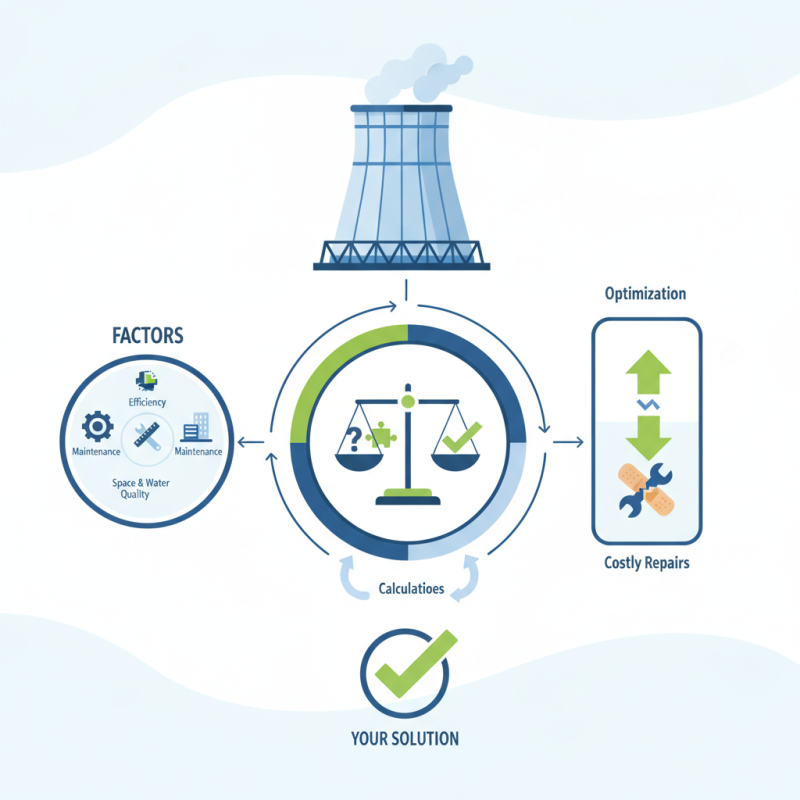
Choosing the right cooling tower can be a daunting task. Many factors affect the decision. A cooling tower isn't just a box; it plays a vital role in many industrial processes.
When selecting a cooling tower, efficiency is key. Different systems offer various cooling capacities. You must consider your specific needs, such as space limitations and water quality. Sometimes, the perfect option might not exist, leading to compromises. A missed calculation can lead to inefficiencies.
Proper maintenance is also crucial for any cooling tower. Neglect can result in costly repairs. Think about how often you can perform routine checks. Choosing the right cooling tower is about balancing many elements. It is essential to find a solution that works for you.
Understanding the Basics of Cooling Towers and Their Applications
Cooling towers play a vital role in various industries. They help dissipate heat from processes like manufacturing or HVAC systems. Understanding their function is key to making the right choice for your needs.
Cooling towers are classified into two main types: open and closed. Open cooling towers circulate water directly with the air. They are efficient but may require more maintenance due to evaporation losses. Closed towers, on the other hand, keep the water contained. This minimizes contaminants but can be less efficient in heat transfer.
Choosing the right cooling tower depends on several factors. Consider the cooling load required by your processes. Also, think about your local climate. Dusty environments may need more robust designs. Evaluate water costs and quality as well. Each application presents unique challenges, making it essential to reflect on these key elements.
Factors to Consider When Selecting a Cooling Tower
Choosing the right cooling tower requires careful consideration of various factors. Start with the cooling load required for your facility. This is crucial. Calculate the heat rejection needs based on your operational requirements.
Tip: Use thermal load calculations to get accurate figures. This helps avoid over-sizing or under-sizing your unit. Both can lead to inefficient operations, increasing energy costs.
Next, consider the location of the cooling tower. Is it indoors or outdoors? Outdoor towers face weather conditions. Indoor units often require additional ventilation systems. Noise levels also matter. For certain environments, quieter operations are essential.
Tip: Check local regulations. Some areas have strict noise limits. Ignoring this can lead to costly modifications later.
Materials of construction can significantly impact the durability of the cooling tower. Corrosion-resistant materials are important if your area has harsh elements. You also need to think about the maintenance requirements. More complex systems may need frequent service.
Tip: Plan for access to the unit. If it’s hard to reach, maintenance could turn into a bigger issue. Reflect on these factors carefully to ensure you choose wisely.
How to Choose the Right Cooling Tower for Your Needs? - Factors to Consider When Selecting a Cooling Tower
| Factor | Description | Importance (1-10) | Recommended Type |
| Flow Rate | The volume of water that will be circulated through the cooling tower. | 10 | Counterflow or Crossflow |
| Site Conditions | Considerations such as space availability, environment, and location. | 8 | Open or Closed Circuit |
| Cooling Capacity | The ability of the tower to remove heat from the water effectively. | 9 | Evaporative Cooling Towers |
| Energy Efficiency | How much energy is consumed relative to its cooling output. | 7 | High Efficiency Models |
| Maintenance Requirements | Frequency and type of maintenance needed to keep the tower operational. | 6 | Modular or Package Units |
Types of Cooling Towers and Their Unique Benefits
When selecting a cooling tower, understanding the types available is crucial. Cooling towers mainly come in two types: open and closed. Open cooling towers utilize evaporation to cool water. They are efficient and less expensive but may require more maintenance. Closed cooling towers operate as a sealed system. They minimize water loss and reduce contamination risks but often come with higher installation costs.
Knowing their benefits helps in making an informed choice. Open towers are great for large-scale operations. They handle high heat loads well. However, they may face scalability issues in smaller settings. Closed towers require less water but may not provide the same cooling capacity as open ones. This can lead to challenges in extreme heat scenarios.
Tip: Always assess your specific needs before making a purchase. Consider your location and water quality. Not all systems work in every environment. Another tip is to consult with industry experts. They can guide you on the best options based on your requirements. It's easy to underestimate the importance of proper sizing and engineering. Miscalculations can result in inefficiency and higher operational costs over time.
Evaluating Efficiency and Performance Metrics
Choosing the right cooling tower requires careful evaluation of its efficiency and performance metrics. The evaluation begins with understanding the cooling capacity needed. This refers to how much heat the tower must remove. Factors such as the source heat load and water temperature play critical roles here. If the cooling capacity is underestimated, the system will struggle, leading to inefficiencies and increased costs.
Efficiency is best measured through specific metrics like thermal performance and energy usage. Look closely at how much energy the cooling tower consumes compared to its performance. A tower that works harder but consumes more energy can lead to unexpected spikes in operational costs. It’s essential to consider local climate conditions. A cooling tower may perform well in one area but struggle in another due to varying ambient temperatures.
Another aspect to reflect upon is the maintenance requirements. Towers with complex designs might promise better efficiency but can lead to higher long-term costs due to maintenance needs. Simpler designs often yield reliable performance but may lack advanced efficiencies. Balancing these factors requires thought and research. Finding a cooling tower that aligns with your operational goals can minimize frustrations down the line.
Cooling Tower Efficiency Comparison
This chart compares the efficiency of different cooling tower types based on their thermal performance and energy consumption metrics. The data illustrates how various designs meet cooling needs more effectively.
Maintenance Requirements for Different Cooling Tower Types
When selecting a cooling tower, maintenance requirements can significantly vary based on its type. For example, open cooling towers often require more frequent upkeep. They accumulate debris and biofilm, needing weekly cleaning. According to the Cooling Technology Institute, regular maintenance can increase efficiency by up to 30%. Failing to keep up with maintenance can lead to reduced performance and higher energy costs.
On the other hand, closed cooling towers typically have lower maintenance needs. These systems are less susceptible to contamination. However, they still require periodic checks on the heat exchangers and pumps. An industry report suggests that neglecting these aspects can lead to corrosion, reducing the lifespan of the equipment significantly.
It's important to be aware that even the most advanced cooling systems can experience issues. Some operators may overlook small leaks, thinking they are not significant. However, even minor leaks can waste water and escalate operational costs. Awareness and diligence are crucial in maintaining efficiency and performance in cooling towers. Choosing the right system involves not only considering upfront costs but ongoing maintenance as well.