How to Choose the Right Switching Power Supply for Your Needs?
Choosing the right Switching Power Supply can be challenging. Many options exist, but not all will meet your needs. A well-selected power supply ensures efficient operation and longevity for your devices.
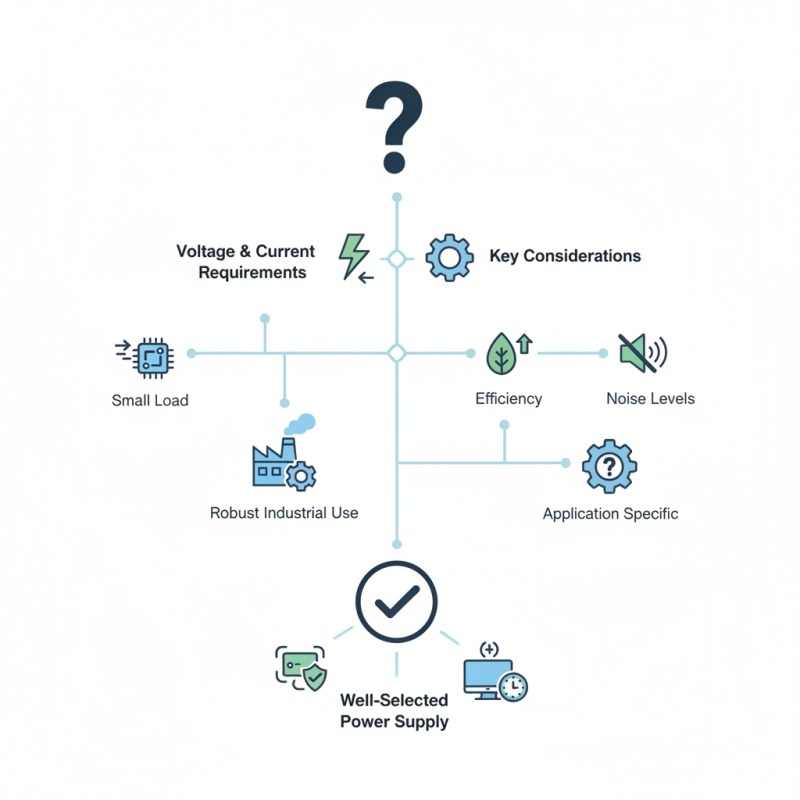
When evaluating different models, consider the voltage and current requirements. The load capacity of a Switching Power Supply is crucial. Do you need a small supply for a single board, or a robust unit for industrial use? These details make a significant difference.
Pay attention to the efficiency ratings. A high-efficiency power supply can save energy in the long run. Think about noise levels too. Some supplies generate interference, impacting sensitive electronics. Reflect on your specific application. Take time to assess both features and limitations.
Understanding Switching Power Supply Types: AC to DC, DC to DC, and More
Choosing the right switching power supply is crucial for your electronic applications. Understanding the types is the key. The most common types are AC to DC and DC to DC converters. AC to DC supplies transform alternating current into direct current, which is essential for devices like computers. These supplies often exhibit efficiencies around 80% to 90%, but they can generate heat, impacting performance and lifespan.
DC to DC converters are another vital option. They step up or down voltage levels effectively. They are favored in battery-operated devices. With rising demand for portable technology, their market is projected to grow significantly, reaching $24 billion by 2024. However, the precision in voltage regulation can be an issue. Variations can lead to device malfunction.
Many users overlook the importance of load requirements. A mismatched power supply can lead to poor efficiency. Often, it results in wasted energy or even component damage. A careful assessment of your specific needs is essential. Ignoring this can lead to costly repairs or replacements in the long run.
Key Specifications to Consider: Voltage, Current, and Efficiency Ratings
When selecting a switching power supply, key specifications determine its suitability for your project. Voltage is critical. Using a power supply with an incorrect voltage can damage your devices. Common output voltages range from 3.3V to 24V, compatible with varied applications. Make sure to match the required voltage, plus a margin for safety.
Current ratings are just as important. A power supply must deliver enough current for your equipment. Insufficient current leads to malfunctions or shutdowns. For example, an average device may need 2A at 12V, so your supply should provide at least that. Consider what happens if you only have 1.5A; devices may underperform.
Efficiency ratings matter too. High efficiency reduces wasted energy. Many reports suggest that supplies with efficiency ratings over 85% are ideal. They save on electricity costs and produce less heat. Lower efficiency supplies generate excess heat, risking system reliability. Therefore, optimal choices can significantly enhance the overall performance and longevity of your setup.
Assessing Power Requirements: Calculating Total Load and Headroom
Assessing power requirements is crucial for choosing the right switching power supply. Start by calculating the total load of your devices. Add the wattage of each component. A common mistake is to overlook small devices. Even minor devices can contribute significantly to total load.
Consider each device's power factor as well. This factor indicates the efficiency of the power consumed. Many power supplies operate at around 80-90% efficiency. If you underestimate your load, you may face overheating or supply failure. It is advisable to include some headroom in your calculations. A good rule of thumb is to add 20-30% extra capacity. This accounts for future upgrades or unexpected power spikes.
**Tip:** Always check the specifications of each device. An inaccurate assumption can lead to disasters.
It's also valuable to assess environmental conditions. High temperatures can affect performance. If your setup is in a cramped space, airflow becomes limited. Consider using a power supply with a fan or venting options. The wrong choice can lead to unexpected shutdowns. Reflecting on your power needs can save time and money in the long run.
How to Choose the Right Switching Power Supply for Your Needs?
| Load Type | Total Load (W) | Headroom (%) | Recommended Supply (W) |
| LED Lighting | 50 | 20 | 60 |
| Home Appliances | 150 | 15 | 175 |
| Computers | 300 | 10 | 330 |
| Industrial Equipment | 500 | 25 | 625 |
| Telecommunication | 200 | 10 | 220 |
Evaluating Efficiency Standards: Importance of Energy Star and Other Certifications
When choosing a switching power supply, efficiency is key. Energy Star certification is a notable standard. It guarantees a certain level of energy efficiency. Products with this label use less energy, helping reduce costs. But it’s not the only certification to consider. Other certifications exist, each with unique criteria. Familiarizing yourself with them can be beneficial.
Not all power supplies are created equal. Some may not meet expected efficiency levels. This could lead to higher energy bills over time. It’s crucial to understand the implications of low efficiency. Every watt saved contributes to lower operational costs. However, efficiency alone may not address all needs.
Consider the specific application for the power supply. Different devices and environments have varying demands. Will it be used in a high-heat environment? If so, find a solution that can handle those conditions. Choosing the right power supply is not just about efficiency. It requires careful thought on how it fits into your overall system. Make informed choices to avoid regrets later.
Selecting the Right Form Factor: Size, Mounting Options, and Cooling Needs
When choosing a switching power supply, size and mounting options play crucial roles. Compact spaces often require smaller units. Think about the layout of your equipment. If space is tight, consider a low-profile design. Ensure the dimensions fit your setup. Too large, and it won't fit at all.
Cooling is another important issue. Some power supplies generate more heat than others. Ensure that air can circulate around the unit. If the design restricts airflow, it may lead to problems. Consider adding a fan if needed. Although it is an extra component, it could save you trouble in the long run.
**Tips:** Always check thermal ratings. They help you understand the temperature limits. Pay attention to environmental conditions as well. Dusty or humid areas may require extra care. A little foresight can prevent headaches down the line. Remember, the right choice today can enhance efficiency and longevity.