
An Electronic Vacuum Gauge measures pressure inside a sealed system, where ordinary room-pressure instruments cannot provide useful readings. It turns a physical effect into an electrical signal. Depending on its design, that effect may involve heat loss, ionization, or mechanical movement. The display then presents an estimated pressure, often in pascals, millibar, or torr. Small details matter. A warm sensor, a dirty connection, or a leak can shift the reading.
Vacuum-science author John F. O’Hanlon offers a useful reminder: “A pressure reading is meaningful only when the gauge’s measurement principle and operating range are understood.” This idea matters because no single gauge performs accurately across every pressure range. A thermal gauge, for example, can respond differently when the gas composition changes. An ionization gauge uses a different principle and suits lower pressures, but requires careful handling and setup. Readings are not magic.
This guide explains what an Electronic Vacuum Gauge is, how its sensor converts pressure into an electrical measurement, and what affects accuracy. It also considers common gauge types, practical applications, calibration, and selection. A display can look precise while still hiding uncertainty. That is worth remembering. Real systems may contain temperature changes, vibration, contamination, and pressure gradients. Understanding those limits helps readers interpret measurements more responsibly and choose equipment suited to the task.
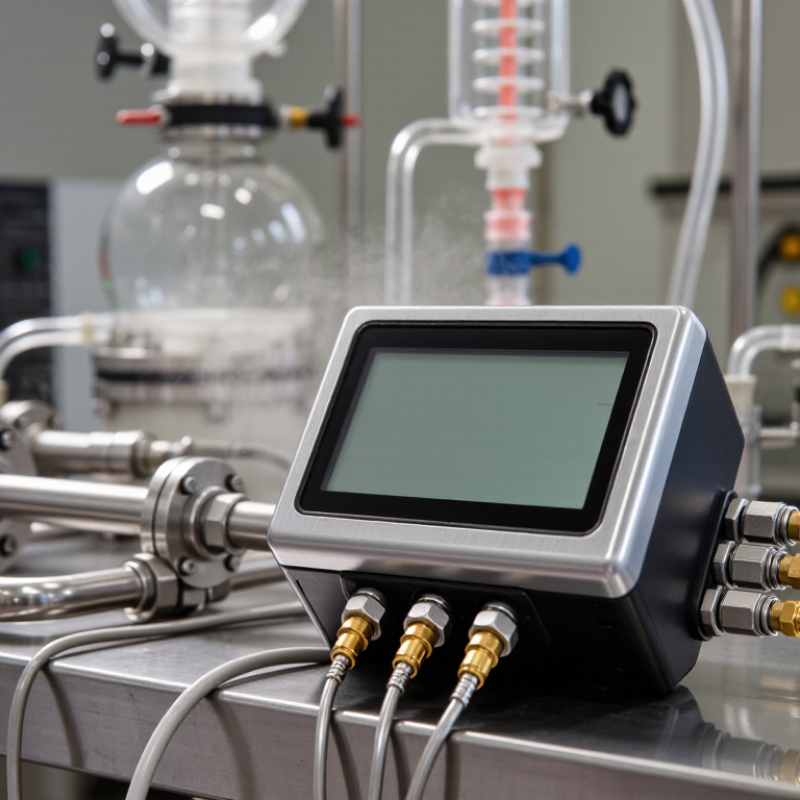
An electronic vacuum gauge measures gas pressure inside a chamber, not “vacuum” as a separate substance. Its sensor converts pressure into an electrical signal, which the instrument displays as a number. The reading may use pascals (Pa), millibars (mbar), or torr. Units matter. A display showing “5” means very different things if its unit is missing.
The conversions are fixed: 1 mbar equals 100 Pa, while 1 Torr equals approximately 133.322 Pa. The National Institute of Standards and Technology’s Special Publication 811 lists these pressure-unit conversion factors; the BIPM SI Brochure defines the pascal as one newton per square metre. For example, 10 mbar equals 1,000 Pa, or about 7.50 Torr. These figures help compare readings across instruments and technical documents.
In practice, the unit is only part of the story. Gauge type, calibration, and gas composition can affect how a reading represents chamber pressure. ISO 3567 describes calibration of vacuum gauges by comparison with a reference gauge. A small display change can matter near a process limit. I have found unit mistakes easy to overlook, especially when readings are copied by hand. That deserves a second check. A sensible log records the value, unit, gauge location, and calibration status together.
An electronic vacuum gauge turns pressure into a measurable electrical signal. In a capacitance diaphragm gauge, pressure bends a thin metal membrane; electrodes detect the change in capacitance and electronics convert it into voltage. A Pirani gauge uses a heated wire: gas molecules carry away heat, changing the wire’s resistance. The relationship is not perfectly linear. Different physics, same goal.
NIST Special Publication 811, Guide for the Use of the International System of Units (SI), gives 1 Torr as approximately 133.3224 pascals. That conversion helps technicians compare readings recorded in different units. It does not make every gauge interchangeable. A Pirani sensor’s response depends on gas type, while an ionization gauge infers pressure from ion current and has its own operating limits. In practice, this is where readings can become less tidy than a diagram suggests. Small signals matter.
Tips: Check the gauge’s specified pressure range and gas setting before trusting a reading. Keep sensor ports clean, and compare results against a calibrated reference when accuracy matters. A displayed number can look precise and still be wrong.
What Is an Electronic Vacuum Gauge and How Does It Work?
An electronic vacuum gauge turns a pressure effect into an electrical signal. A Pirani gauge measures how gas removes heat from a heated wire. As pressure falls, fewer molecules carry heat away, changing the wire’s temperature and resistance. Published technical specifications commonly place Pirani measurement near atmosphere down to about 10⁻⁴ mbar, though gas type and calibration affect readings. Ionization gauges take over at lower pressures. They ionize residual gas molecules and measure the resulting ion current. Hot-cathode designs can reach around 10⁻¹² mbar in suitable systems; that is an instrument limit, not a guarantee of chamber pressure.
ISO 3567:2011 describes direct-comparison calibration of vacuum gauges against reference gauges. This matters because readings near the Pirani-to-ionization crossover can disagree. The 10⁻⁴ to 10⁻¹² mbar span covers eight orders of magnitude, so one sensor rarely measures it reliably alone. Ion-gauge readings also depend on gas composition, surface cleanliness, and electrical noise.
Tips: Use the Pirani gauge to monitor rough pumping, then compare readings during handoff to the ionization gauge. Check calibration gas and mounting position. A small leak or outgassing can distort ultra-low readings. Don’t treat a stable display as proof of a clean vacuum; it is easy to overlook the chamber itself.
Electronic vacuum gauges convert a pressure-dependent physical effect into an electrical signal. The ranges below are typical guide values; actual limits depend on gauge design, gas composition, calibration, and operating conditions.
| Gauge type | Typical pressure range | How it works | Useful characteristics | Important limitations |
|---|---|---|---|---|
| Pirani gauge | Approximately 10³ to 10⁻⁴ mbar, depending on design | A heated element loses heat to the surrounding gas. The heat loss changes with gas pressure and is detected through a change in the element’s temperature or electrical resistance. | Rugged and useful for rough and medium vacuum; commonly used to monitor pump-down and provide a higher-pressure measurement in a combination system. | Reading depends on gas thermal conductivity, so calibration for air or nitrogen may not give an accurate absolute reading for other gases. Sensitivity falls at very low pressure. |
| Hot-cathode ionization gauge | Typically about 10⁻³ to 10⁻¹⁰ mbar; specialized designs can measure lower | Electrons emitted by a heated cathode ionize gas molecules. The resulting positive-ion current is measured and, within the operating range, is related to pressure. | Provides sensitive measurements in high and ultra-high vacuum. Bayard–Alpert-style designs reduce the collector’s exposure to X-rays and can extend the low-pressure measurement limit. | Usually must be switched on only after the pressure is sufficiently low, often below roughly 10⁻² mbar. Gas-dependent sensitivity, contamination, and X-ray effects can limit accuracy at the lowest pressures. |
| Cold-cathode ionization gauge | Typically about 10⁻² to 10⁻⁹ mbar, with limits varying by design | A high-voltage electric field and magnetic field sustain a discharge without a heated filament. Ionization current provides a pressure-related signal. | No hot filament to burn out; often used for high-vacuum monitoring and where a robust ionization sensor is preferred. | May start unreliably at lower pressures and can be affected by deposits, magnetic-field conditions, and gas composition. Its useful lower limit is design-dependent. |
| Ultrahigh-vacuum ionization gauge | Specialized gauges can reach approximately 10⁻¹¹ to 10⁻¹² mbar under suitable conditions | Uses ionization-current measurement with a design intended to reduce background effects, such as X-ray-induced current, and support measurements at extremely low gas densities. | Can monitor very high and ultrahigh vacuum when the gauge, chamber, and measurement setup are suited to the task. | The lowest indicated pressures are especially sensitive to outgassing, contamination, electrical leakage, gauge geometry, and calibration. They should not be assumed to represent a universal range for all ionization gauges. |
| Pirani–ionization combination gauge | May cover roughly 10³ to 10⁻¹⁰ mbar or lower with a suitable ionization section | Combines a thermal-conductivity sensor for higher pressures with an ionization sensor for high and lower pressures; electronics select or report the appropriate measurement. | Convenient for following pressure across much of a vacuum-system pump-down without changing sensors. | The two sensor sections have different gas responses and operating limits. The combined instrument’s full range is not necessarily available with equal accuracy at every pressure. |
Range guide: A Pirani gauge commonly reaches approximately 10⁻⁴ mbar, while ionization gauges extend into high and ultrahigh vacuum. Reaching 10⁻¹² mbar requires a suitable specialized gauge and measurement conditions; it is not a general lower limit for every ionization gauge.
An electronic vacuum gauge measures pressure inside a chamber and converts the sensor response into an electrical signal. The display then reports a pressure value. The result depends on the gauge’s sensing method.
A thermal conductivity gauge estimates pressure from how quickly gas carries heat away from a heated element. An ionization gauge responds to gas molecules that become electrically charged. Neither method responds identically to every gas.
Gas type matters because molecules transfer heat and form ions differently. A thermal gauge calibrated for nitrogen may show a different value when the chamber contains argon or helium, even at the same true pressure. Some gauges provide gas-correction settings, but using the wrong setting can mislead process checks.
Small details matter. Calibration also affects confidence in a reading. It compares the instrument with a known reference under specified conditions; it does not make every measurement perfect. Sensor contamination, temperature changes, and aging can cause drift.
Check the calibration record, confirm the selected gas, and allow the sensor to stabilize before recording pressure. It is tempting to trust a steady display, but steady does not always mean accurate.
What Is an Electronic Vacuum Gauge and How Does It Work?
An electronic vacuum gauge converts a pressure-dependent signal into a readable value. Depending on its sensor, it may infer pressure from gas heat loss, force on a diaphragm, or ion current. Mounting determines whether the reading represents the chamber or only the gauge port. Place the sensor near the region being monitored, with a short, wide connection where practical. Narrow tubes and elbows restrict gas flow. Pressure can differ across the connection during pumping or gas admission. Small details matter.
Orientation also matters for some sensor designs. Follow the specified position, and keep the gauge away from hot surfaces, vibration, and direct deposits. Contamination changes sensor response: oil films, dust, and process residue can affect heat transfer or electrical behavior. A gauge may still display a stable number. Readings can mislead. Keep the port capped during installation, use clean tools, and avoid touching sensing surfaces. After cleaning or maintenance, allow readings to stabilize and compare them with a suitable reference when accuracy is important. A clean-looking fitting can still hold residue; appearance alone is not proof. Recheck the setup if readings drift or disagree with another measurement.