
Download the 2025 Focal Car Catalogue | Focal INSIDE Catalogue | Join our Mailing List!

How to Choose the Best Vinyl Player Turntable

Choosing a Vinyl Player Turntable is less about chasing a famous logo and more about matching the deck to your records, room, and habits. A beginner may value simple setup and a built-in phono preamp. A seasoned listener may prefer adjustable tracking force, a replaceable cartridge, and room to upgrade. The right choice should make playing a record feel inviting, not like a repair project.

Audio journalist and turntable reviewer Michael Fremer has repeatedly highlighted the importance of careful setup. His advice can be summed up simply: “A good turntable needs a good setup.” That point matters when a cartridge sits slightly crooked or a dusty record crackles through the speakers. Even a capable deck can sound disappointing when its tonearm or tracking force is poorly adjusted. Conversely, a modest model can deliver satisfying playback when it is configured well.

This guide will compare belt-drive and direct-drive designs, automatic and manual operation, built-in versus separate phono stages, and cartridge options. It will also consider practical details, including shelf stability, replacement parts, and the cost of maintenance. Numbers can help, but they do not tell the whole story. I would be cautious about treating any one specification as proof of superior sound. A turntable is a system, and your speakers, records, and setup all shape what you hear.
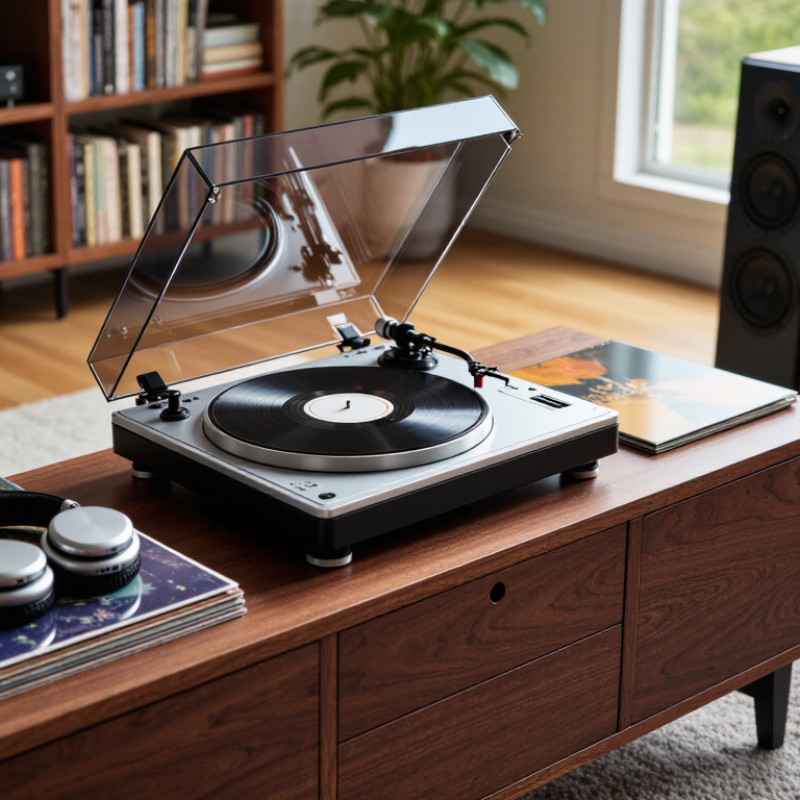
How to Choose the Best Vinyl Player Turntable

Identify Your Listening Needs and Budget

Before choosing a vinyl player turntable, decide what you want from listening. Will it be a quiet ritual in a small room, or music shared with friends? Check what equipment you already own. A turntable with a built-in phono preamp can connect directly to many powered speakers; other setups need a separate preamp and amplifier. That changes the real cost. The Recording Industry Association of America reported U.S. vinyl-record revenue of $1.4 billion in 2023, up 10% from 2022. That growth shows sustained interest, not that every listener needs an expensive setup. Start with a budget that includes speakers, records, and replacement styluses, not just the player.

Tips: Write down your full setup budget. Leave a little room for records. If you listen through headphones, confirm how they will connect before buying. For a first system, prioritize stable speed, an adjustable tracking force, and a replaceable stylus. A heavier plinth may look reassuring, but careful setup matters more. You’ll hear the difference.

Be honest about your habits. If you play one album on weekends, simple controls may suit you better than elaborate adjustments. If you expect to upgrade, choose a model with standard connections and replaceable parts. RIAA figures describe the U.S. market, so they may not reflect local prices or record availability. And personal taste is awkward to quantify: a slightly imperfect, affordable setup that gets used can be a better fit than a costly one left untouched.

Compare Turntable Drive Systems and Speed Options

When comparing turntable drive systems, focus on how you will use the deck, not on claims that one design always sounds better. Belt-drive models place an elastic belt between motor and platter. That separation can reduce motor vibration reaching the stylus, though belt condition and setup matter. Direct-drive models couple motor and platter more closely, often supporting quick starts and steady speed. They can suit frequent cueing, but motor noise and speed regulation still depend on the design. Listen for low, even background noise and stable sustained notes. Small flaws become obvious on piano.

Speed options matter just as much. Most modern records play at 33⅓ or 45 revolutions per minute; some older records require 78 rpm. Check the actual speed selector and cartridge compatibility before buying. A 78 rpm record may need a dedicated stylus, not merely a faster setting. In its 2023 year-end report, the Recording Industry Association of America reported 43.2 million vinyl album units sold in the United States. That market figure signals broad interest, but it does not tell you which drive system performs best. Be skeptical of sweeping sound claims. Match speed support to your collection, then check measured wow and flutter, speed accuracy, and vibration specifications where available. One detail is easy to miss: a turntable can offer the right speeds and still need careful leveling to play consistently.

Evaluate the Tonearm, Cartridge, and Upgrade Potential

A turntable’s tonearm should move smoothly, without wobble or gritty resistance. With the platter stopped, gently lift and lower the arm; it should feel controlled, not loose. Check that the counterweight adjusts easily and that the cueing lever lowers the stylus slowly. A sudden drop can damage a record. Small details matter.

The cartridge converts groove movement into an electrical signal, so its condition and compatibility deserve attention. If buying used, ask whether the stylus is new or how long it has played. A worn stylus may look fine to the eye. It can still mistrack. Also check whether the cartridge can be replaced separately, and whether the tonearm accepts standard mounting hardware. Some compact designs limit your choices.

Think about upgrades you may actually make, rather than paying for possibilities you will never use. A replaceable headshell can make cartridge changes easier, while adjustable tracking force and anti-skate settings help with careful setup. Confirm that replacement parts are available before committing. I once assumed an easy-to-swap cartridge meant an easy upgrade; alignment took longer than expected. A small protractor and patience made the difference. If setup sounds intimidating, a simpler arm may be the better fit. There is no perfect deck for every listener.

Check Speakers, Amplifiers, and Connectivity Requirements

A turntable can sound disappointing when its connections do not match the rest of your system. Check the output type before buying. Some models include a built-in phono preamp, which lets you connect them to powered speakers or an amplifier with a standard line input. Others provide only a phono-level signal and need a separate preamp or an amplifier with a dedicated phono input. The difference matters: a phono signal is quieter and needs equalization before normal playback. Read the specifications carefully, since “preamp included” does not always mean every output option is available.

Next, check what your speakers require. Powered speakers contain their own amplification; passive speakers need a compatible amplifier. Confirm the amplifier supports the speakers’ impedance and provides enough power for comfortable listening, rather than simply choosing the largest number on a product sheet. Keep the setup simple. A short stereo cable, a stable shelf, and room to place the speakers apart can make daily use easier. It is easy to overlook this. I have found that cable reach and outlet locations can shape a setup more than expected.

Wireless connectivity may be convenient, but it can add another conversion step and may not preserve the detail some listeners want. If you prefer wired playback, confirm the turntable has the required outputs and that your amplifier has matching inputs. For headphones, check whether the amplifier or speakers provide a headphone jack; many turntables do not. Leave a little room for future changes. Still, buying extra connections “just in case” can become wasted expense. Decide how you actually listen, then match the turntable, preamp, amplifier, and speakers as one system.

How to Choose the Best Vinyl Player Turntable - Check Speakers, Amplifiers, and Connectivity Requirements
Your Setup or Need Turntable Feature to Check Speaker and Amplifier Requirements Connectivity and Compatibility What to Look For
Powered speakers Built-in phono preamp, or a separate phono preamp Powered speakers have a built-in amplifier; no separate power amplifier is usually needed. Connect the turntable’s line-level output to an available analog input on the speakers. Check for a clearly labeled LINE output or switch. If the turntable only provides a phono-level signal, add a phono preamp.
Stereo receiver or integrated amplifier with a PHONO input A phono-level output is suitable; a built-in preamp is optional. Connect passive speakers to the receiver or amplifier, following its speaker-impedance specifications. Use the turntable’s PHONO output with the receiver’s PHONO input. Avoid applying two phono preamps in series. If the turntable has a preamp switch, select PHONO when using the receiver’s PHONO input.
Stereo amplifier without a PHONO input Built-in phono preamp, or an external phono preamp The amplifier powers passive speakers; select speakers within the amplifier’s supported load range. Connect a line-level signal to an AUX, LINE, or other compatible analog input. A turntable’s PHONO output should not be connected directly to a standard line input without phono equalization and amplification.
Headphones Check whether the turntable includes a headphone output; many do not. Use a headphone amplifier or receiver with a headphone jack if the turntable has no suitable output. Confirm the connector type and whether the output is line-level or intended to drive headphones. A line output is not the same as a headphone output and may not provide enough power for headphones.
Wireless listening Bluetooth transmission, if wireless playback is required Use compatible wireless speakers or headphones that support the same Bluetooth audio connection. Check whether the turntable transmits audio over Bluetooth; Bluetooth reception alone does not transmit to speakers. Wireless audio may add latency or use lossy compression. A wired connection is generally preferable for straightforward stereo playback.
Digital recording or computer connection USB output, if digitizing records is needed USB is typically used for recording, not for powering passive speakers. Check the computer’s operating-system compatibility and whether recording software is required. For listening through speakers, use the appropriate analog output path as well as USB if the turntable’s design requires it.
Compact or all-in-one setup Built-in phono preamp and, if desired, integrated speakers Integrated speakers reduce setup complexity, but may offer less placement flexibility than separate speakers. Confirm which outputs are available for adding external speakers or recording equipment. Check the complete signal path: cartridge, phono preamp, amplifier, and speakers. Each required function must be provided somewhere in the system.
Any setup using passive speakers The turntable alone does not normally power passive speakers. A separate power amplifier, integrated amplifier, or receiver is required. Connect the turntable to a suitable phono or line input, then connect the amplifier’s speaker outputs to the passive speakers. Match speaker impedance and power handling to the amplifier’s specifications; follow the equipment manuals for safe connections.

Assess Setup, Maintenance, and Long-Term Value

A turntable’s setup affects more than convenience; it shapes how consistently it plays. Check whether the unit includes a cartridge, dust cover, and clear instructions, since missing parts can add cost or confusion. Place it on a stable, level surface, away from speakers that may cause vibration. A small bubble level helps, though getting the placement perfect can take a few tries. It is easy to overlook that.

Maintenance is modest but regular. Brush dust from records before playing, keep the stylus clean with the method specified in the manual, and avoid touching its delicate tip. Over time, belts can stretch and styli wear down, so check replacement availability and prices before buying. A lower purchase price may not mean a lower cost after several years. Keep a simple note of replacement dates; memory is not always reliable.

Long-term value also depends on repairability and upgrade options. A replaceable cartridge or belt can extend useful life, while a sealed design may limit choices if a part fails. Compare the warranty terms, service support, and cost of common replacement parts. For a realistic budget, include records, cleaning supplies, and occasional service—not just the player. Some owners rarely use upgrade options, so paying extra for features you will not use may not be worthwhile.

How to Choose the Best Vinyl Player Turntable: Setup, Maintenance & Long-Term Value

Estimated stylus life varies by stylus profile and use. A longer-lasting stylus may reduce replacement frequency, while careful setup, clean records, and proper tracking force help protect both stylus and records.

These are general estimates, not guarantees. Actual life depends on cartridge design, alignment, tracking force, cleanliness, and listening conditions. Check the cartridge maker’s guidance.