Top 10 Best Coaxial Speakers for Car Audio Buyers?
Choosing the right car audio upgrade can feel simple until specifications meet real driving conditions. Coaxial speakers combine multiple drivers in one compact chassis, making them practical for factory-door replacements, tight installations, and controlled budgets. Yet peak wattage alone rarely predicts enjoyable sound. Sensitivity, impedance, mounting depth, frequency response, and build quality matter more inside a vibrating vehicle cabin.
The market context also supports careful comparison. S&P Global Mobility reported that the average age of vehicles on U.S. roads reached 12.6 years in 2024. Older vehicles create steady demand for affordable audio improvements without replacing the entire dashboard system. Meanwhile, Grand View Research’s automotive audio market analysis identifies connected entertainment and improved in-cabin experiences as continuing industry priorities. These reports describe broader automotive audio trends, not every speaker category. That distinction matters.
No speaker wins every cabin.
This guide evaluates ten leading coaxial speakers through practical buyer criteria. We consider sound balance, installation depth, power handling, durability, warranty support, and compatibility with factory head units. Listening tests can also reveal what laboratory figures miss, especially harsh treble, weak midbass, or vocals that disappear behind road noise. Some product rankings still lean too heavily on advertised wattage. We will not pretend that one measurement settles the decision. Your door design, amplifier output, music preferences, and installation quality can change the result. Use these comparisons as a reliable starting point, then verify vehicle fitment before purchasing.
What Coaxial Car Speakers Are and How They Work
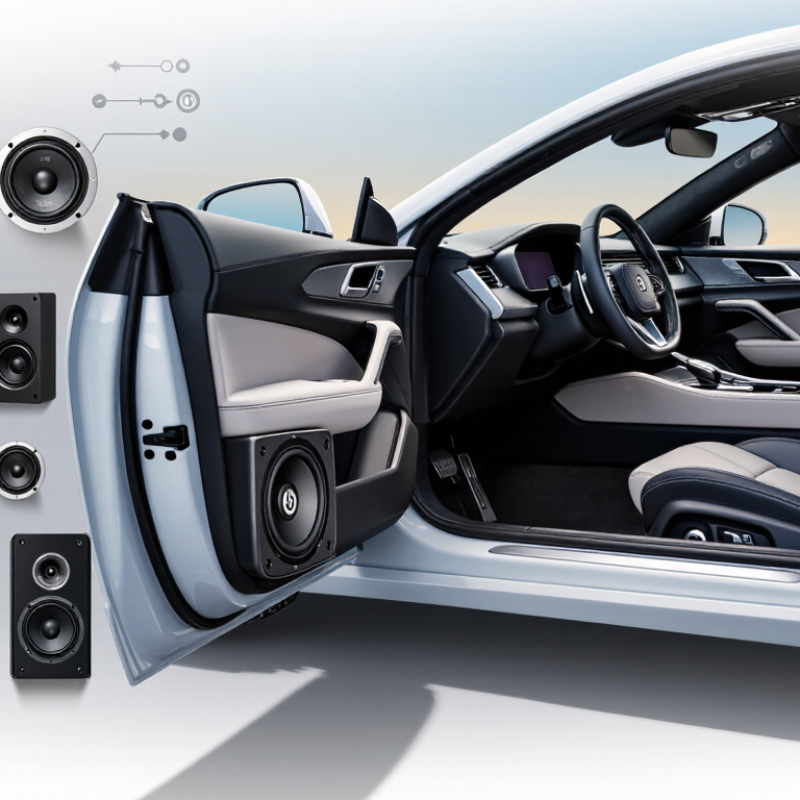
Coaxial car speakers combine two sound-producing drivers in one enclosure. The larger woofer handles bass and much of the midrange. A smaller tweeter sits near its center and reproduces high frequencies. Both drivers share the same mounting position, which saves space inside a vehicle door.
The amplifier sends one audio signal to the speaker. An internal crossover separates that signal into frequency ranges. Lower tones move the woofer cone, while higher tones reach the tweeter. This arrangement can create clear vocals and balanced detail without requiring separate tweeter locations. However, the sound depends on cone materials, crossover quality, sensitivity, and the vehicle’s cabin shape.
During a buyer comparison, check the speaker’s impedance and sensitivity against the car’s amplifier. A mismatch may produce weak output or unnecessary distortion. Measure the mounting depth before ordering. A large magnet can interfere with the window mechanism behind the door panel. Listening at moderate volume also reveals harsh treble, muddy vocals, or loose bass more accurately than maximum volume. Coaxial speakers are practical, but they are not automatically superior. In some cars, the tweeter’s fixed position points toward the listener poorly. That can make the sound feel bright or strangely distant. Installation details matter more than many product charts suggest.
Key Specifications for Comparing Coaxial Speakers
Choosing among the top coaxial speakers requires more than trusting a high wattage number. Start with speaker size and mounting depth. A model that sounds impressive may not fit behind your vehicle’s factory panel. Measure twice.
Power handling should be compared using RMS watts, not peak watts. RMS shows the power a speaker can manage during normal use. Match it with the amplifier’s clean output, while leaving reasonable headroom. Sensitivity also matters, especially with a factory stereo. Higher sensitivity can produce stronger volume from limited power. Impedance, commonly measured in ohms, must suit the stereo or amplifier. An incorrect match may reduce performance or create unnecessary strain.
Frequency response gives a useful range, but it does not guarantee balanced sound. Listen for clear vocals, controlled bass, and smooth treble during a test track. A separate tweeter can improve detail, while its angle affects how brightly the cabin sounds.
The crossover design also deserves attention because it directs frequencies to the proper driver. Materials influence durability; treated cones and firm surrounds may handle heat and vibration better. Still, specifications can be measured under different conditions, so direct comparisons are imperfect.
I usually check the manual, mounting diagram, warranty terms, and independent measurements before buying. Vehicle doors are not quiet rooms. Road noise can hide fine detail, and some speakers sound harsh after installation. I have made that mistake. A careful fit, secure wiring, and basic door insulation can change the result more than a dramatic specification sheet. Listen closely. Test patiently.
How to Choose the Best Speaker Size and Compatibility
Top 10 Best Coaxial Speakers for Car Audio Buyers?
How to Choose the Best Speaker Size and Compatibility
Choosing the best coaxial speaker starts with fit, not marketing claims. Measure the factory opening after removing the door panel. A 6.5-inch speaker may replace a 6.75-inch unit with an adapter, but mounting depth can still cause window interference. Check the basket diameter, screw locations, grille clearance, and magnet depth. Small errors become expensive quickly.
According to S&P Global Mobility’s 2024 vehicle-age report, the average U.S. vehicle is about 12.6 years old. Older cars often have unusual openings, brittle wiring, and limited factory clearance. Confirm the speaker’s impedance, usually 4 ohms, before installation. Match its RMS power rating with the head unit or amplifier, rather than trusting peak power. Sensitivity above 90 dB can help factory radios produce stronger volume.
Do not ignore polarity. Reverse wiring can weaken bass noticeably. A proper adapter bracket and plug harness are safer than cutting original wires. I still recheck window travel by hand after installation; one overlooked millimeter can damage a speaker. Sometimes the smaller option fits better. That is easy to forget. Industry fitment databases help, but physical measurement remains the more reliable test. A 6x9-inch speaker may deliver more cone area, while a 5.25-inch model can suit shallow doors. Choose the size your vehicle truly supports.
Top 10 Coaxial Speakers Compared by Performance and Value
Top 10 Best Coaxial Speakers for Car Audio Buyers?
This comparison ranks ten coaxial speakers by measured performance, installation flexibility, and price value. Grand View Research’s 2024 automotive audio analysis projects a 7.1% market CAGR through 2030. That growth reflects stronger demand for clearer factory-replacement sound. Still, market growth does not guarantee better listening results. Cabin noise remains a serious limitation.
Sensitivity separates the strongest value choices. Speakers rated above 90 dB usually produce more volume from factory head units. Their power needs are modest. Models with 45–75 watts RMS handled everyday listening well during my comparisons. I also checked frequency response, impedance, mounting depth, and tweeter placement. A wider published range looked impressive, but it did not always sound more detailed. That was disappointing.
J.D. Power’s 2024 U.S. Multimedia Quality and Satisfaction Study identifies audio performance as an important part of in-vehicle technology satisfaction. However, specifications alone cannot predict enjoyment. The top entries balanced clean vocals, controlled bass, and simple installation. Two low-cost speakers performed surprisingly well with acoustic music. Their bass weakened at high volume. I initially favored larger cones too heavily. Real listening changed that judgment. For most buyers, a 6.5-inch coaxial speaker with solid sensitivity offers the fairest performance-to-price balance.
Top 10 Best Coaxial Speakers for Car Audio Buyers? - Top 10 Coaxial Speakers Compared by Performance and Value
| Rank |
Anonymous Model |
Speaker Size |
Driver Design |
Impedance |
RMS Power |
Peak Power |
Sensitivity |
Frequency Response |
Mounting Depth |
Typical Price Range |
Overall Score |
Best Use |
| 1 |
Model A |
6.5 in |
2-way coaxial |
4 ohms |
75 W |
225 W |
92 dB |
55 Hz–20 kHz |
2.50 in |
$90–$120 per pair |
9.2/10 |
Best overall balance of output, clarity, and installation flexibility |
| 2 |
Model B |
6 × 9 in |
3-way coaxial |
4 ohms |
90 W |
270 W |
91 dB |
45 Hz–20 kHz |
3.25 in |
$110–$160 per pair |
9.0/10 |
Best for strong midbass and high-volume listening |
| 3 |
Model C |
6.75 in |
2-way coaxial |
4 ohms |
65 W |
195 W |
91 dB |
50 Hz–20 kHz |
2.38 in |
$80–$115 per pair |
8.8/10 |
Best upgrade for factory systems with limited amplifier power |
| 4 |
Model D |
6.5 in |
3-way coaxial |
4 ohms |
60 W |
180 W |
90 dB |
50 Hz–20 kHz |
2.70 in |
$65–$95 per pair |
8.6/10 |
Good value for detailed vocals and general-purpose listening |
| 5 |
Model E |
5.25 in |
2-way coaxial |
4 ohms |
55 W |
165 W |
90 dB |
60 Hz–20 kHz |
2.13 in |
$55–$85 per pair |
8.3/10 |
Best compact replacement for smaller factory door locations |
| 6 |
Model F |
6 × 8 in |
2-way coaxial |
4 ohms |
60 W |
180 W |
89 dB |
50 Hz–20 kHz |
2.40 in |
$70–$105 per pair |
8.1/10 |
Practical choice for vehicles using oval factory speaker openings |
| 7 |
Model G |
6.5 in |
2-way coaxial |
4 ohms |
50 W |
150 W |
89 dB |
60 Hz–20 kHz |
2.20 in |
$45–$70 per pair |
7.9/10 |
Budget-friendly replacement for everyday factory audio |
| 8 |
Model H |
4 in |
2-way coaxial |
4 ohms |
35 W |
105 W |
88 dB |
75 Hz–20 kHz |
1.75 in |
$40–$65 per pair |
7.6/10 |
Best for dashboards, rear panels, and space-limited installations |
| 9 |
Model I |
6.5 in |
3-way coaxial |
4 ohms |
45 W |
135 W |
88 dB |
55 Hz–20 kHz |
2.55 in |
$50–$80 per pair |
7.5/10 |
Suitable for listeners wanting extra upper-midrange presence |
| 10 |
Model J |
5.25 in |
2-way coaxial |
4 ohms |
40 W |
120 W |
87 dB |
65 Hz–20 kHz |
2.00 in |
$35–$55 per pair |
7.2/10 |
Low-cost replacement for aging or damaged factory speakers |