
Download the 2025 Focal Car Catalogue | Focal INSIDE Catalogue | Join our Mailing List!

What Are the Top 10 Virtual Reality Devices for Buyers?

Choosing a virtual reality headset is about more than chasing the sharpest screen or newest feature. Virtual Reality Devices differ in how they connect, how they track movement, and what they let you experience. Some work independently, while others rely on a gaming computer or console. That choice can shape setup time, room requirements, and total cost. Small details matter. A headset that feels comfortable for ten minutes may press against your face during a longer session. A clear display may still show blur around the edges, depending on fit and lens adjustment. These differences are easy to miss in a spec sheet.

This guide looks at ten notable devices through practical buyer questions: display quality, tracking, controllers, comfort, available apps, and value for the price. It considers both first-time buyers and people upgrading an older headset, without assuming that one model suits everyone. Product availability and software support can change, so check current details before purchasing. Reviews and specifications offer useful evidence, but personal fit remains difficult to predict from a webpage. That is an honest limitation. The comparison is not perfect, either: comfort and motion sensitivity vary between users, and a feature-rich headset may still be the wrong choice for a particular room or routine. The goal is a clear starting point, with trade-offs made visible rather than hidden behind marketing claims.
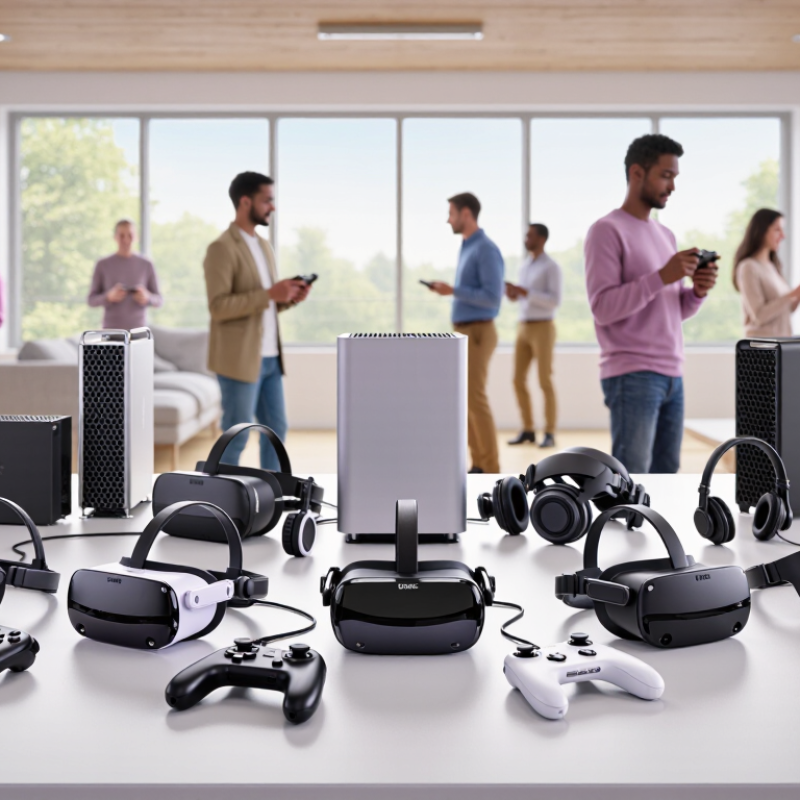
What Are the Top 10 Virtual Reality Devices for Buyers?

Define Buyer Criteria: Price, 6DoF Tracking, Resolution, and Refresh Rate

When comparing the top ten virtual reality devices, begin with the activities you expect to use most. Price should include more than the headset: controllers, required accessories, and a capable computer can change the real cost. Set a firm budget before comparing specifications. A lower-priced model may be the sensible choice for occasional play, while frequent use can justify spending more on comfort.

Check whether the headset offers six degrees of freedom, or 6DoF. This lets you move through a room and turn your head, rather than only look around from a fixed position. Resolution affects how sharp text and distant details appear, but lens quality and fit also matter. Refresh rate, measured in hertz, influences how often the image updates; higher rates can feel smoother, though they may demand more computing power. Fit matters. A small demo can reveal pressure around the nose or blurred edges that a specification sheet misses. Compare the stated resolution per eye, tracking requirements, and return terms, and treat advertised figures cautiously. I would not rank devices by resolution alone. Test it. Comfort is easy to underestimate, and even a strong specification can disappoint after an hour of use.

Compare Standalone VR: Quest 3 Provides 2064 × 2208 Pixels per Eye

For buyers comparing standalone virtual reality devices, resolution is a useful starting point, not a verdict. One current headset offers 2064 × 2208 pixels per eye, a specification that can make text and fine edges appear more defined. The figure applies to each eye, not the combined view. That distinction matters when comparing product listings. Numbers help. But they do not tell you how evenly the lenses focus across the display.

Standalone models contain their own processor, battery, and tracking sensors, so they do not require a computer during ordinary use. That convenience comes with trade-offs: demanding scenes can reduce visual sharpness, and a headset’s weight may become noticeable after an hour. Try checking text near the edge of the view, not only in the center. Also consider whether the head strap feels stable when you look down. I’m not fully convinced that resolution deserves the top spot in every comparison; comfort and lens clarity can matter more during actual use. Manufacturers may measure specifications under different conditions, so compare published figures carefully and, where possible, test a demo before buying.

Assess PC VR: Valve Index Supports a 120 Hz Refresh Rate

For PC VR buyers, a 120 Hz headset can make quick turns feel smoother, especially in racing or rhythm games. At 120 Hz, the display refreshes every 8.33 milliseconds. That is a tight frame budget, not a guarantee of steady performance. The PC must render each frame on time, or dropped frames can undermine the benefit. Check the headset’s lens clarity, comfort, tracking, and adjustment range alongside its refresh-rate specification.

A 2023 review in Frontiers in Virtual Reality describes cybersickness as multifactorial, so a higher refresh rate alone cannot prevent discomfort. It may help, but fit, stable performance, and individual sensitivity matter too. Try a short session before committing to long play periods. If motion feels uncomfortable, stop and take a break. No spec sheet can predict every user’s response.

Tips: Test a demanding scene, not just the home screen. Watch for stutter during fast movement, and confirm your PC sustains the headset’s chosen resolution and refresh rate. A 120 Hz setting that forces frequent frame drops may feel worse than a lower, stable setting. That trade-off is easy to overlook.

What Are the Top 10 Virtual Reality Devices for Buyers? — Assess PC VR: 120 Hz Refresh Rate

A representative buyer’s shortlist, organized by display, tracking, and platform characteristics. Rankings are editorial, not a universal performance score.

Rank Device Profile Resolution per Eye Refresh Rate Tracking and Platform Buyer Consideration
1 PC base-station headset with high-refresh mode 1440 × 1600 pixels 80, 90, 120, or 144 Hz External base-station tracking; tethered PC The 120 Hz mode offers smooth motion, while 144 Hz is available with compatible hardware and settings.
2 Standalone mixed-reality headset with pancake lenses 2064 × 2208 pixels 72, 80, 90, or 120 Hz Inside-out tracking; standalone use and wireless or wired PC streaming Combines standalone operation with mixed-reality features; supported refresh rates can vary by application.
3 Entry-level standalone mixed-reality headset 1832 × 1920 pixels Up to 90 Hz Inside-out tracking; standalone use and PC streaming support A lower-cost route into standalone VR, with a less detailed display than higher-resolution models.
4 Standalone headset with high-resolution pancake optics 2160 × 2160 pixels 72 or 90 Hz Inside-out tracking; standalone use and PC streaming High per-eye resolution and compact optics; check regional availability and software compatibility.
5 PC headset with high-resolution displays and base-station tracking 2448 × 2448 pixels 90 or 120 Hz External base stations; tethered PC Offers a high-resolution 120 Hz mode, but requires a capable PC and compatible tracking setup.
6 PC headset with inside-out tracking 2160 × 2160 pixels 90 Hz Headset-mounted cameras; tethered PC Inside-out tracking avoids external sensors; this model generation is discontinued, so availability may be limited to used or remaining stock.
7 Console-connected OLED headset 2000 × 2040 pixels 90 or 120 Hz Inside-out tracking; designed for a dedicated console platform OLED displays, eye tracking, and supported 120 Hz content; it is not a general-purpose PC headset.
8 Compact standalone and PC-compatible headset 1920 × 1920 pixels Up to 90 Hz Inside-out tracking; standalone use and PC connection options Offers both standalone and PC use; battery life and fit can matter for extended sessions.
9 Custom-fit PC headset with micro-OLED displays 2560 × 2560 pixels 75 or 90 Hz External base-station tracking; tethered PC Very compact and lightweight, but requires compatible external tracking equipment and a PC.
10 PC headset with high-resolution displays and eye tracking 2880 × 2720 pixels Up to 90 Hz External base-station tracking; tethered PC Designed for detailed PC visuals; check current availability and graphics-card requirements before buying.

Specifications describe published headset capabilities; actual refresh rates and features may depend on software, connection mode, and system configuration.

Review Console VR: PS VR2 Delivers 2000 × 2040 Pixels per Eye

A console VR headset with 2000 × 2040 pixels per eye makes fine details easier to pick out. Text on a distant sign looks cleaner, while bright highlights stand out against darker scenes. Its OLED panels and 90Hz or 120Hz refresh modes support rich contrast and smooth motion. Still, resolution alone cannot guarantee clarity. Lens alignment matters; a small shift can soften the image, especially near the edges.

IDC’s Worldwide Quarterly AR/VR Headset Tracker reported that global AR/VR headset shipments fell 23.5% in 2023, to 6.7 million units. That market context makes practical fit and setup worth weighing alongside specifications.

This model connects to a console by cable, so play space and cable routing need attention. A clear trade-off. The cable can feel limiting when turning quickly, and the headset’s weight may become noticeable during longer sessions.

For buyers comparing console VR, try the fit if possible and check whether their room has enough clear floor space. The high pixel count is appealing, but comfort is less easy to measure on a spec sheet.

Rank 10 Devices by Comfort, Content, Compatibility, and Total Cost

This ranking compares ten headset types by comfort, content access, compatibility, and total ownership cost. It is a practical guide, not a laboratory score. Fit differs with head shape, glasses, and session length.

1. Mainstream standalone headset: strong all-round value, broad app access, and no computer required. 2. Lightweight standalone headset: easier on the neck, though its smaller battery may limit long sessions. 3. PC-tethered headset: detailed visuals and a large PC library, but it needs a capable computer and cable management. 4. Console-tethered headset: simple setup for compatible console owners, with a narrower content library. 5. Mixed-reality passthrough headset: useful for blending virtual objects with a room, but often costly. 6. Previous-generation standalone headset: affordable when discounted, with shorter future support a real concern. 7. Compact wired PC headset: lighter to wear, but less convenient to set up. 8. Enterprise standalone headset: durable and capable, yet many buyers may not need its workplace tools. 9. Phone-powered viewer: inexpensive and easy to store, but limited in tracking and interactive content. 10. Premium PC headset with external tracking: precise and immersive, though its computer, sensors, and accessories raise the total cost.

Try a headset with your usual glasses if possible. A soft face pad can still press on the nose after twenty minutes. Check whether comfort accessories, replacement padding, and required software add costs; listings do not always make those details obvious. For some buyers, this ranking will be wrong.

Top 10 Virtual Reality Devices for Buyers

Comparative scores for comfort, content, compatibility, and cost value (0–10; higher is better).

Scores are rubric-based estimates informed by published headset specifications, supported content, platform requirements, and typical U.S. headset-only pricing. They are not lab measurements; prices and availability vary. “Cost value” rewards lower purchase cost and fewer required extras. Device labels are anonymized.