What Are the Best Types of Car Speakers in 2026?
Choosing the best car speakers in 2026 is less about chasing the biggest wattage figure and more about matching the speaker to your vehicle, listening habits, and budget. A compact factory opening may suit a well-designed coaxial speaker, while separate component speakers can offer more control over where vocals and high notes sit. Neither option wins in every car. That matters.
This guide compares the main types of car speakers, including coaxial, component, and subwoofer systems. It explains what specifications can—and cannot—tell you. Sensitivity, impedance, speaker size, and power handling all deserve a look, but none guarantees excellent sound on its own. A speaker listed as 6.5 inches, for example, may still need a vehicle-specific adapter or careful fitment checks. Door depth matters. So does installation quality.
The recommendations focus on practical compatibility and balanced performance rather than one-size-fits-all claims. If possible, listen to speakers with familiar music, at a comfortable volume, before deciding. Pay attention to clear vocals, controlled bass, and harshness on bright sounds. Personal preference complicates any ranking, and product specifications do not capture every real-world difference. A costly upgrade can disappoint if it clashes with the factory system; a modest pair may be enough for everyday listening. The sections ahead help narrow the choices and identify which type best fits your priorities.
How IEC 60268-5 Measures Loudspeaker Performance
What Are the Best Types of Car Speakers in 2026?
How IEC 60268-5 Measures Loudspeaker Performance
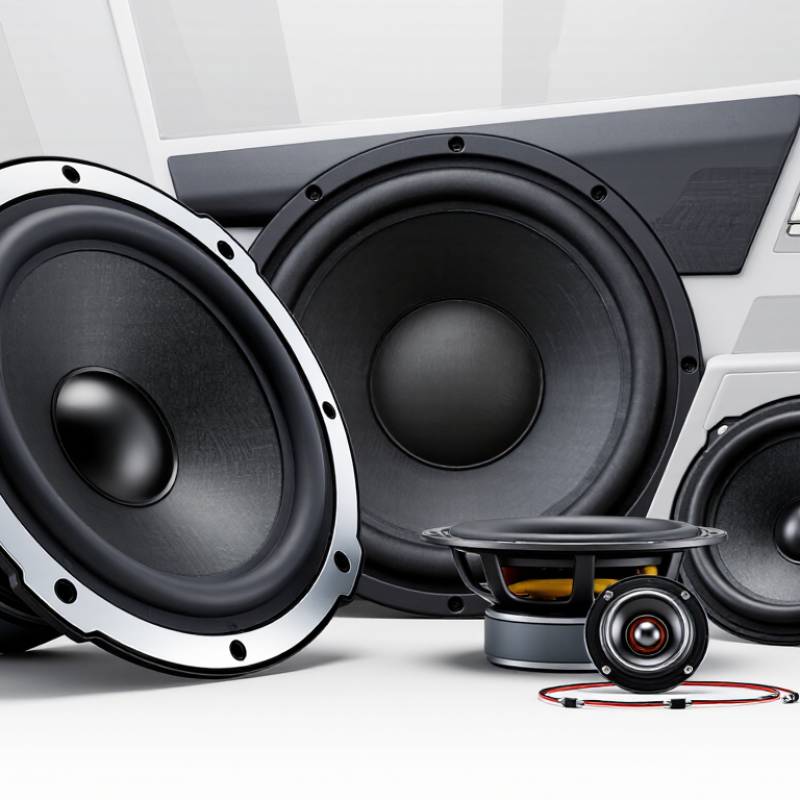
Speaker types are only part of the comparison. IEC 60268-5:2003, including its 2007 amendment, sets methods for measuring loudspeaker performance under defined conditions. Its test data can cover frequency response, sensitivity, impedance, distortion, and power handling. These measurements help compare speakers fairly. They do not predict every car’s sound.
Read the conditions beside each number. Sensitivity is commonly reported in decibels at one metre, but the input matters. At four ohms, 2.83 volts supplies about two watts, roughly three decibels more than one watt. So an 88 dB result at 2.83 V/1 m cannot be compared directly with 88 dB at 1 W/1 m. Small differences matter.
The standard’s measurements offer useful evidence, not a cabin-performance guarantee. A car door can leak bass; glass and hard trim reflect sound. A speaker that measures smoothly in a controlled setup may sound sharper or thinner after installation. That gap is easy to overlook. Check the test conditions and frequency-response data, then listen in the actual vehicle when possible. One limitation remains: standardized figures cannot fully capture placement, mounting, or personal preference.
Coaxial vs. Component Speakers: Drivers, Crossovers, and 2-Way Designs
Coaxial speakers place a woofer and tweeter on one frame, usually with a simple crossover. This compact design fits many factory door openings and keeps installation straightforward. A woofer handles lower and midrange notes; the tweeter reproduces higher frequencies. In a two-way design, those drivers split the workload. The crossover directs suitable frequencies to each driver, reducing overlap. Small detail. A poorly matched crossover can still leave vocals sharp or bass muddy.
Component speakers separate the woofer, tweeter, and crossover. That separation gives installers more choice: a tweeter can sit higher on a door or near the dashboard, improving stereo imaging. It also means extra wiring, careful placement, and sometimes more installation work. Component sets are not automatically better. Door depth, amplifier power, sensitivity, and rattling panels can matter more than the speaker label. I would check fit and listening position before paying for extra complexity.
The market is growing, but market size does not prove one design sounds better. Grand View Research estimated the global automotive audio market at about $9.6 billion in 2023 in its Automotive Audio Market Size, Share & Trends Analysis Report. For an actual upgrade, compare driver layout and crossover type, then confirm impedance and mounting depth against the vehicle. A two-way coaxial and a two-way component set both use woofer-and-tweeter drivers; their main difference is placement and installation flexibility. Listen carefully. A familiar track can reveal harsh cymbals, recessed vocals, or door-panel vibration that a specification sheet may miss.
Coaxial vs. Component Speakers: Typical 2-Way Design
A typical 2-way setup uses one woofer and one tweeter per channel. The main architectural difference is whether the crossover network is separate or integrated into the speaker assembly.
Both designs provide a woofer and tweeter. Coaxial speakers position them together, usually with crossover components built into or attached to the speaker; component systems separate the drivers and typically use an external crossover network. Actual designs vary, so choose based on sound goals, available mounting locations, and installation requirements.
Matching 4-Ohm Speakers to Amplifier RMS Ratings
A 4-ohm speaker is a sensible match only if the amplifier can safely drive a 4-ohm load.
Check its RMS output per channel at 4 ohms, not its peak-power figure. Compare that number with the speaker’s continuous RMS rating. A small difference is usually manageable when the system is set up carefully.
Not just the label.
For example, a speaker rated for 60 watts RMS can work with an amplifier delivering around 50 to 75 watts RMS per channel at 4 ohms. More power is not automatically a problem, but excessive volume or poor gain settings can damage a speaker. Too little power can also become risky if the amplifier is pushed into audible distortion.
Set the gain to match the signal, not to make the volume knob feel more powerful.
Remember that 4 ohms is a nominal rating; a speaker’s impedance changes across different frequencies. Also check the amplifier’s minimum supported impedance, especially when connecting multiple speakers to one channel. A wiring diagram can help, but it is easy to misread.
I would verify each speaker’s rating and the amplifier manual before connecting anything.
RMS numbers make a useful starting point, not a guarantee of sound quality. The car’s cabin, speaker placement, and installation quality matter too.
Comparing Sensitivity in dB SPL at 1 W/1 m
When comparing car speakers, sensitivity tells you how efficiently a speaker turns electrical power into sound.
A rating of 90 dB SPL at 1 W/1 m means it produces 90 decibels at one meter with one watt under specified test conditions. Higher numbers generally mean more output from the same power. Small differences matter less than they may seem.
Coaxial and component speakers can both have high sensitivity; speaker type alone does not predict loudness. Check that ratings use the same 1 W/1 m method before comparing models. Some specifications use 2.83 volts instead, which is not always equivalent to one watt. This is easy to overlook. At four ohms, 2.83 volts supplies about two watts, so that figure can make a speaker appear more sensitive.
In a car, listening distance, cabin reflections, door installation, and background road noise all affect what you hear. A speaker rated at 92 dB may play louder than one rated at 88 dB with the same clean amplifier power, but it will not fix muddy installation or poor tuning. Compare sensitivity alongside impedance, power handling, and measured response. The specification helps narrow a choice, not settle it. Real cabins are messy. That part deserves a careful listen.
Choosing Subwoofers by Frequency Range, Enclosure, and Vehicle Space
Choosing a subwoofer starts with the bass you want, not the biggest number on a box. A unit’s frequency range can indicate how low it plays, but room, tuning, and installation affect what you hear. Deep, even bass often needs a suitable enclosure and enough power. Numbers alone can mislead. In a compact hatchback, a bulky box may crowd luggage space and rattle loose trim. Measure the available area before comparing models.
Sealed enclosures are usually compact and can deliver controlled bass. Ported designs may play louder around their tuning range, but they generally need more space. Neither type is automatically better. Check the enclosure’s recommended volume and the vehicle’s usable dimensions, including height beneath a cargo cover. Also consider where the subwoofer will sit. A poorly placed box can block storage or make access awkward. I might favor a smaller setup for daily use, though that choice can sacrifice some output.
Tips: Compare the subwoofer’s usable frequency range with your listening preferences, then check enclosure specifications. Leave room for wiring and ventilation. Secure the enclosure, and set the crossover so bass blends naturally with the other speakers. A test listen matters. Specs cannot predict every cabin’s sound.