Download the 2025 Focal Car Catalogue | Focal INSIDE Catalogue | Join our Mailing List!

How to Choose the Right Car Subwoofer for Global Sourcing?

Choosing the right car sub for global sourcing requires more than comparing wattage and price. Buyers must connect acoustic performance with manufacturing reliability, shipping conditions, and market requirements. A 10-inch model may fit a compact vehicle, but its mounting depth can still create installation problems. Check RMS power, impedance, sensitivity, frequency response, and enclosure compatibility together. Peak power figures often look impressive. They can also mislead.

Experienced sourcing teams request technical drawings, material details, test reports, and production samples before placing large orders. Listen to the sample inside a real vehicle, not only in a showroom. Bass should remain controlled when the volume rises. Excessive vibration may reveal weak surrounds, poor adhesives, or an unstable basket. Ask suppliers how they manage voice-coil alignment, magnet consistency, and final inspection. A reliable factory should explain these controls clearly and provide traceable records.

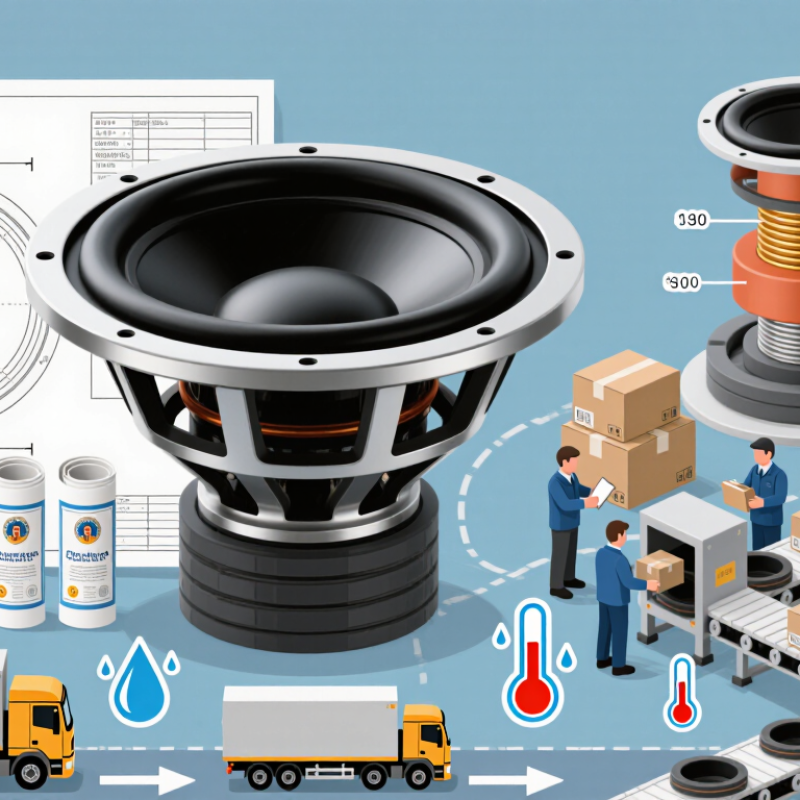
Global sourcing adds practical risks. Humidity, temperature changes, and rough handling can damage packaging or alter product performance. Confirm carton strength, moisture protection, labeling, warranty terms, and replacement procedures. Verify applicable safety, environmental, and import requirements for each target market. Certifications deserve careful review. A copied document is not proof of current compliance.

No sourcing plan is perfect. A spreadsheet may miss a small but costly detail. That is why independent testing, factory audits, and honest supplier communication remain valuable. The best car sub is not always the loudest or cheapest. It is the model that delivers consistent bass, fits the vehicle, survives international logistics, and supports dependable customer service.
How to Choose the Right Car Subwoofer for Global Sourcing?

Define Your Car Audio Goals and Subwoofer Performance Requirements

Before choosing a car subwoofer for global sourcing, define the listening experience you want. A compact sedan may need controlled bass, not maximum volume. A larger vehicle can support deeper extension and higher output. Consider music styles, cabin size, passenger comfort, and available installation space. “Louder” is not always better.

Use RMS power as the main performance reference, rather than peak power claims. Match the subwoofer’s impedance with the amplifier’s stable operating range. Check frequency response, sensitivity, cone material, and voice-coil design. A sealed enclosure usually delivers tight, predictable bass. A ported enclosure can produce stronger output, but it needs accurate tuning. Small details matter, especially in a noisy cabin.

During supplier evaluation, request measured test data, enclosure recommendations, wiring diagrams, and sample units. Listen at moderate volume, then inspect heat buildup after extended use. I once focused too heavily on low-frequency extension and overlooked installation depth. That created avoidable fitting problems. Real vehicles often differ from technical drawings. Ask for tolerance ranges, production consistency records, and safety documentation for each market. Performance should remain stable across temperature changes, vibration, and long daily use. Some specifications still need independent verification.

How to Choose the Right Car Subwoofer for Global Sourcing?

Define the vehicle's acoustic goal before comparing suppliers. The chart presents practical sourcing benchmarks for low-frequency extension and continuous RMS power across common car-audio use cases.

These values are planning benchmarks rather than universal specifications. Final requirements should also consider cabin size, enclosure type, amplifier matching, electrical capacity, installation space, and local market preferences.

Compare Subwoofer Types, Sizes, Power Ratings, and Sensitivity

How to Choose the Right Car Subwoofer for Global Sourcing?

Subwoofer selection starts with type, not appearance. Sealed enclosures deliver tighter bass and need less space. Ported enclosures produce louder low frequencies, but require accurate tuning. Under-seat models suit compact vehicles, while larger trunk systems offer deeper extension. A 2024 Grand View Research analysis valued the global automotive audio market at several billion dollars, showing strong demand for practical upgrades. However, market growth does not guarantee suitable performance.

Size changes sound and installation risk. A 10-inch subwoofer often balances cabin space and musical control. A 12-inch model can move more air, but usually needs greater enclosure volume.

Check continuous RMS power, not peak figures. The amplifier should match the subwoofer’s RMS rating within a reasonable range. Sensitivity also matters. A higher sensitivity rating can produce more output with the same power.

ANSI/CTA-2031-A measurement guidance helps buyers compare amplifier power under consistent conditions, although specifications still vary between suppliers.

Tips: Request RMS, impedance, sensitivity, enclosure volume, and frequency-response data together. Confirm whether sensitivity uses 1 watt or 2.83 volts. That detail can mislead comparisons. Ask for sample testing before a large order. I have seen impressive peak ratings hide weak continuous performance. It is not perfect. Vehicle cabin shape, temperature, and installation quality can change the final result.

Match the Subwoofer With Your Amplifier and Vehicle Audio System

Choosing the right car subwoofer starts with the amplifier, not the catalog photograph. Match the subwoofer’s RMS power rating to the amplifier’s RMS output at the same impedance. A 500-watt amplifier should not drive a 1,000-watt subwoofer effectively without sufficient headroom. Check impedance carefully. A dual-voice-coil model can offer flexible wiring, but incorrect wiring may overload the amplifier.

Vehicle acoustics matter just as much. A compact cabin often produces stronger low-frequency gain than a large SUV. Measure the available enclosure space behind the seat, including ventilation and cable clearance. Sealed enclosures usually deliver tighter bass, while ported designs create more output but require accurate tuning. Research from Grand View Research valued the global automotive audio market at over USD 11 billion in 2023, with continued growth expected through the decade. This expansion makes specification discipline more important for global sourcing.

For procurement teams, request frequency-response curves, impedance tolerances, RMS testing conditions, and enclosure recommendations. Do not rely on peak power alone. CTA research has repeatedly shown that consumers value connected and enhanced in-vehicle experiences, yet louder bass does not always mean better sound.

I have seen impressive prototypes fail because the amplifier clipped at ordinary listening levels. That mistake is easy to repeat. Confirm connector standards, vehicle voltage compatibility, and installation depth before approving samples. A small mismatch can create noise, distortion, or disappointing bass.

Evaluate Enclosure Design, Installation Space, and Vehicle Compatibility

How to Choose the Right Car Subwoofer for Global Sourcing?

A suitable subwoofer begins with the enclosure, not the advertised power rating. Sealed boxes usually deliver controlled bass and require less space. Ported designs can produce deeper output, but they need accurate port dimensions and additional clearance. During supplier evaluation, request enclosure drawings, material thickness, internal volume, and tolerance data. Small measurement errors can change acoustic performance.

Installation space must be measured inside the vehicle, not estimated from catalog images. Check trunk depth, seat movement, mounting height, wiring routes, and access to the spare-tire area. Leave room for ventilation and service work. A compact enclosure may fit physically, yet block cargo space or interfere with a folding seat. That is a costly surprise.

Vehicle compatibility also depends on the electrical system and factory audio layout. Confirm impedance, amplifier output, available mounting points, and signal connection methods. Hybrid and electric vehicles may have unusual battery protection requirements, so qualified installers should verify the vehicle documentation. I once trusted a nominal size too quickly; the enclosure fit, but the terminal position did not. Recheck every drawing. Request sample installation photos from the exact vehicle class, then compare them with independent measurements before placing a global order.

Verify Global Sourcing Standards, Suppliers, Costs, and Shipping Requirements

Choosing a car subwoofer for global sourcing requires more than comparing bass response and retail price. Start by defining power handling, impedance, enclosure size, frequency range, and installation conditions. These details shape compliance, packaging, and landed cost. Ask suppliers for product drawings, material declarations, sample test results, and a current quality-control plan. Reliable suppliers should explain tolerance limits, inspection stages, warranty procedures, and production capacity clearly. Vague answers deserve a second review.

Verify applicable electrical, recycling, labeling, and safety requirements in each destination market. Request traceable reports from qualified laboratories, and confirm that documents match the exact model. Do not accept a certificate with a similar-looking product number.

Requirements change. Check connector types, language labels, carton markings, and user instructions before placing a large order. Supplier audits and pre-shipment inspections can reveal loose terminals, inconsistent adhesives, or damaged cones.

Costs extend beyond the unit quotation. Calculate tooling, samples, testing, inspection, export handling, freight, insurance, duties, taxes, storage, and possible rework. Use written Incoterms and clarify who controls each shipping responsibility.

Measure carton dimensions and gross weight carefully; a small packaging error can raise freight charges. My early estimates were too optimistic because I ignored pallet height. That mistake changed my sourcing checklist. Before approval, compare at least two freight routes and request a landed-cost worksheet. Keep every revision recorded.