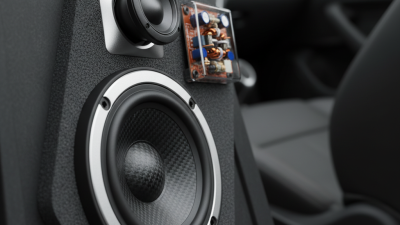
How to Choose the Best Vehicle Speakers for Your Car?
Choosing the right vehicle speakers can transform a familiar drive into a clearer, more enjoyable listening experience. However, the most expensive model is not always the best match. Your car’s door depth, factory wiring, amplifier power, and listening habits all matter. A speaker that sounds impressive in a showroom may perform differently behind a vehicle’s glass, seats, and trim panels.
Car audio builder and educator Steve Meade has said, “A great system should sound balanced before it sounds loud.” That principle remains useful when comparing vehicle speakers. Listen for clean vocals, controlled bass, and detailed instruments. Harsh treble can become tiring during a long commute. Weak bass may reveal poor installation rather than a poor speaker. Even small details matter, such as whether the mounting bracket fits securely and whether the door panel vibrates at higher volume.
Start by checking the speaker size and sensitivity recommended for your car. Then compare the speaker’s power handling with the factory stereo or aftermarket amplifier. Coaxial speakers offer simple installation, while component systems can create a more precise soundstage. Material choices also influence performance. Silk tweeters often sound smooth, while polypropylene cones can provide dependable durability.
There is no perfect choice.
Your music preferences may change the answer. A careful comparison, ideally inside your own vehicle, is more reliable than specifications alone. I would not ignore installation quality, either. A modest speaker installed correctly can outperform a premium speaker fitted carelessly. The goal is balanced sound, practical compatibility, and lasting value.
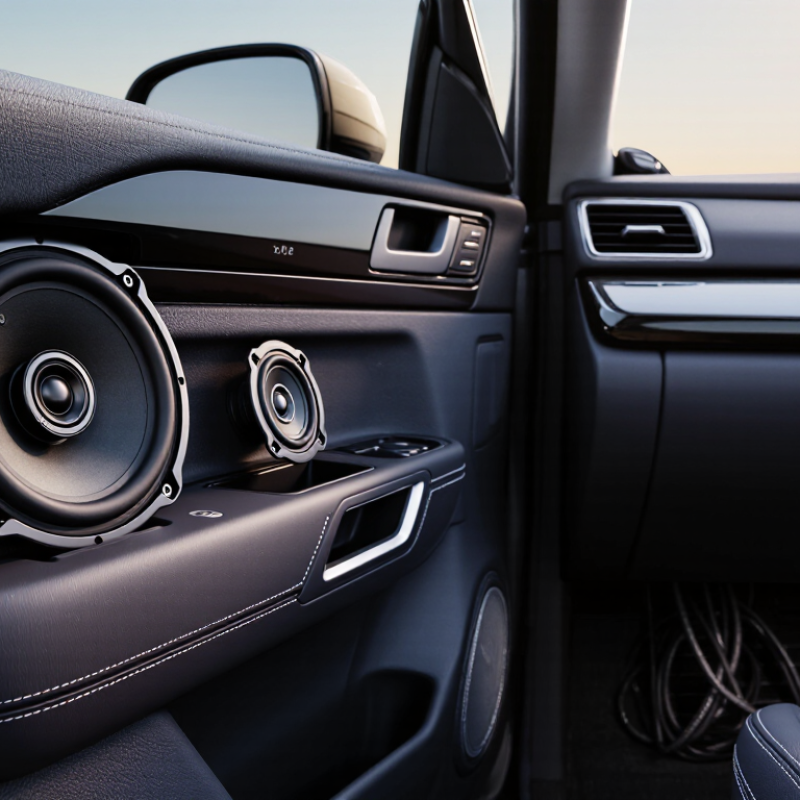
Assess Factory Compatibility: Size, Impedance, and 4-Ω Speaker Standards
How to Choose the Best Vehicle Speakers for Your Car?
Factory compatibility starts with measurements, not appearance. Check the original speaker’s diameter, mounting depth, bolt pattern, and connector shape. Common openings measure 6.5 inches or 6×9 inches, but vehicle tolerances differ. A speaker can fit the door and still touch the window mechanism. I have seen this mistake create rattling after installation. S&P Global Mobility’s 2024 vehicle-age analysis puts the average U.S. light vehicle at about 12.6 years old. Older vehicles often have undocumented wiring changes. Verify everything physically.
Impedance deserves equal attention. Many replacement speakers use a nominal 4-ohm rating, widely accepted for aftermarket systems. However, factory speakers may use 2, 3, or 4 ohms. Replacing a 2-ohm unit with a 4-ohm model can reduce amplifier output. IEC 60268-5 explains that nominal impedance is a rated value, not the speaker’s exact resistance at every frequency. Check the factory amplifier label or service documentation. Also compare sensitivity, measured in decibels. A higher-sensitivity speaker may play louder with limited factory power.
Tips: Photograph the wiring before removal. Measure depth with the window fully lowered. Do not assume both front doors match. A multimeter can reveal basic resistance, but it cannot replace the vehicle’s wiring diagram. My early installations relied too heavily on listed dimensions; that was convenient, but not always reliable.
How to Choose the Best Vehicle Speakers for Your Car?
Factory compatibility depends on speaker size, mounting depth, connector fit, and nominal impedance. The chart compares theoretical power demand at the same 10 Vrms amplifier output.
How to read this chart: At the same amplifier voltage, lower impedance draws more current and demands more power. A 4-ohm nominal speaker is a common factory-compatible standard, but the replacement must also match the original speaker's diameter, mounting depth, screw pattern, wiring connector, and clearance. Values use the ideal relationship P = V²/R at 10 Vrms; real speakers have frequency-dependent impedance.
Match Continuous RMS Power, Using Speaker Ratings in Watts RMS
Choosing car speakers starts with continuous RMS power, not impressive peak numbers. RMS describes the power a speaker can handle during sustained, clean playback. Match this figure to the amplifier’s continuous RMS output at the same impedance. A 60-watt RMS speaker suits an amplifier delivering roughly 45 to 75 watts RMS per channel. This range is practical, not a rigid rule. Ignore peak numbers. They describe brief bursts and can mislead buyers.
Check the amplifier’s test conditions carefully. Its power rating may change at 2, 4, or 8 ohms, and distortion may rise near its limit. Speaker sensitivity also matters, especially with a factory head unit. Higher sensitivity can produce stronger volume from limited power. In my installation experience, modest speakers often sounded cleaner than oversized models driven by a weak source. Clean power matters more.
Leave reasonable headroom, but do not assume more wattage always improves sound. An amplifier with slightly higher RMS output can work well when its gain is set correctly. Excessive gain does not create useful power; it encourages clipping and heat. I once focused too heavily on matching numbers and overlooked the vehicle’s wiring and listening habits. That choice taught me to verify impedance, cabin noise, and daily volume levels before buying. Measure twice. Then listen at normal volume for several minutes.
Compare Sensitivity, Targeting About 88–92 dB SPL for Efficient Operation
When choosing vehicle speakers, sensitivity deserves close attention. It shows how loudly a speaker plays from a given amount of power, usually measured at one watt and one meter. For most cars, targeting about 88–92 dB SPL offers efficient operation without demanding a powerful amplifier. A 92 dB speaker can sound noticeably louder than an 88 dB model with the same power.
Check the measurement standard carefully. Some specifications use 2.83 volts instead of one watt, and the result can change with speaker impedance. Compare numbers only when the testing methods match. Cabin noise from tires, ventilation, and traffic can mask quiet details, so efficient speakers often produce clearer vocals at moderate volume. Small numbers matter.
In my installation experience, a 90 dB speaker paired well with a factory head unit, while a less sensitive model sounded restrained and thin. However, sensitivity does not guarantee smooth bass or natural treble. Listen for harshness around voices and cymbals, especially after ten minutes of playing. A speaker may appear impressive in a quick demonstration, yet become tiring during a long drive.
Consider the amplifier’s clean power, the speaker’s impedance, and the available mounting depth. Higher sensitivity can reduce electrical strain, but it may also involve design compromises. I once focused too heavily on the specification and underestimated tonal balance. That mistake still matters. Measure twice. Then compare familiar recordings inside the actual vehicle.
Evaluate Frequency Response Across the Audible 20 Hz–20 kHz Range
How to Choose the Best Vehicle Speakers for Your Car?
A speaker rated at 20 Hz–20 kHz may look impressive, but that number needs context. IEC 60268-5 and CTA-2031-A emphasize standardized loudspeaker measurements, including frequency-response consistency. Look for a smooth curve, not simply the widest range. A response of 45 Hz–18 kHz with small deviations can sound more balanced than a claimed 20 Hz–20 kHz range with deep peaks and gaps.
Listen closely.
ISO 226:2003 equal-loudness data shows that human hearing sensitivity changes across frequencies and volume levels. Low bass often needs more acoustic energy, while harsh upper-midrange peaks can become tiring quickly. In a parked car, door panels, glass, and seat materials also reshape the response. I once trusted a wide specification and ignored a 3 kHz rise. The vocals sounded sharp after ten minutes. That shortcut was wrong.
Use a calibrated sweep from 20 Hz to 20 kHz, then test familiar music at moderate volume. Check whether bass remains firm near 50 Hz, speech stays natural around 1–4 kHz, and cymbals avoid brittle edges above 10 kHz. A phone app can reveal rough problems, but its microphone is not laboratory equipment. Adult hearing also varies, so an inaudible 18 kHz peak may not matter to every listener. Pair measurement data with repeated listening in the actual vehicle, because the cabin—not the brochure—decides the final sound.
Choose Materials, Installation Design, and IEC-Based Performance Testing
How to Choose the Best Vehicle Speakers for Your Car?
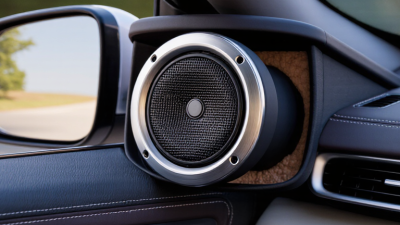
Material choice affects clarity, durability, and installation risk. Polypropylene cones resist moisture and temperature changes, while treated paper can sound warmer. A rigid composite cone usually delivers better control at higher volume. However, stiffness alone does not guarantee natural sound. I have heard expensive materials perform poorly when the door cavity remains unsealed.
Grand View Research estimated the global automotive speaker market at about USD 5.7 billion in 2023. Its report also projects steady growth through 2030. This growth reflects demand for clearer sound in compact vehicle interiors. Still, specifications should not replace listening tests. A speaker with high sensitivity may work better with a factory amplifier. Check impedance, mounting depth, grille clearance, and available wiring before purchase.
Installation design matters as much as the driver. A sealed adapter ring can prevent air leaks around the door metal. Foam treatment can reduce vibration near the mounting surface. Keep wiring away from window mechanisms. IEC 60268-5 provides methods for measuring loudspeaker performance, including frequency response and sensitivity. IEC 60268-21 supports more detailed acoustic measurements. Compare response curves measured under similar conditions, not isolated marketing figures. A 2024 report from the Audio Engineering Society stresses controlled measurement as essential for credible loudspeaker comparisons. Real cars remain imperfect test rooms. Road noise, glass reflections, and seat position change the result. Test at normal driving volume, then listen again after several days.