China Best Car Audio Subwoofers for Wholesale Buyers
China’s car audio subwoofers market is attracting serious wholesale attention. Buyers now seek reliable bass performance, compact designs, and stable supply.
Grand View Research reports continued growth in the global automotive audio market. Its analysis identifies rising in-car entertainment demand as a major growth driver. Fortune Business Insights also highlights connected vehicles, premium interiors, and improved sound systems as important market influences. These trends create opportunities for Chinese manufacturers and international distributors.
Yet wholesale purchasing requires more than comparing advertised wattage. A 12-inch subwoofer may deliver impressive impact, but enclosure volume, sensitivity, impedance, and amplifier matching determine real performance. Buyers should also inspect cone materials, voice-coil construction, thermal handling, testing procedures, and warranty support. Small details matter. A poorly matched system can produce muddy bass inside a carefully finished vehicle.
Steve Meade, a recognized car-audio installer and educator, often explains the principle this way: “It’s not about being loud; it’s about making the system sound right.” That idea remains practical for professional sourcing. Loudness attracts attention, but controlled response protects customer satisfaction.
This guide examines China car audio subwoofers for wholesale buyers. It considers factory capability, product consistency, customization, certifications, packaging, and after-sales service. Reported market figures can vary between research firms. That weakness deserves attention. No single report perfectly represents every regional buyer or vehicle category. Therefore, purchasing decisions should combine market data, factory audits, sample testing, and real installation feedback.
Car Audio Subwoofer Types for Wholesale Buyers in China
China Best Car Audio Subwoofers for Wholesale Buyers
Car Audio Subwoofer Types for Wholesale Buyers in China
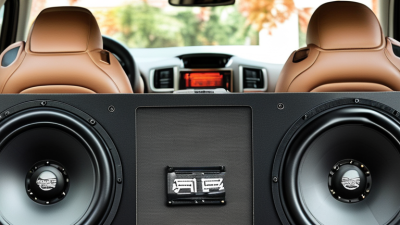
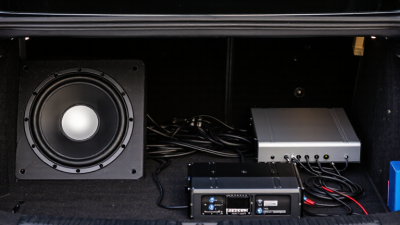
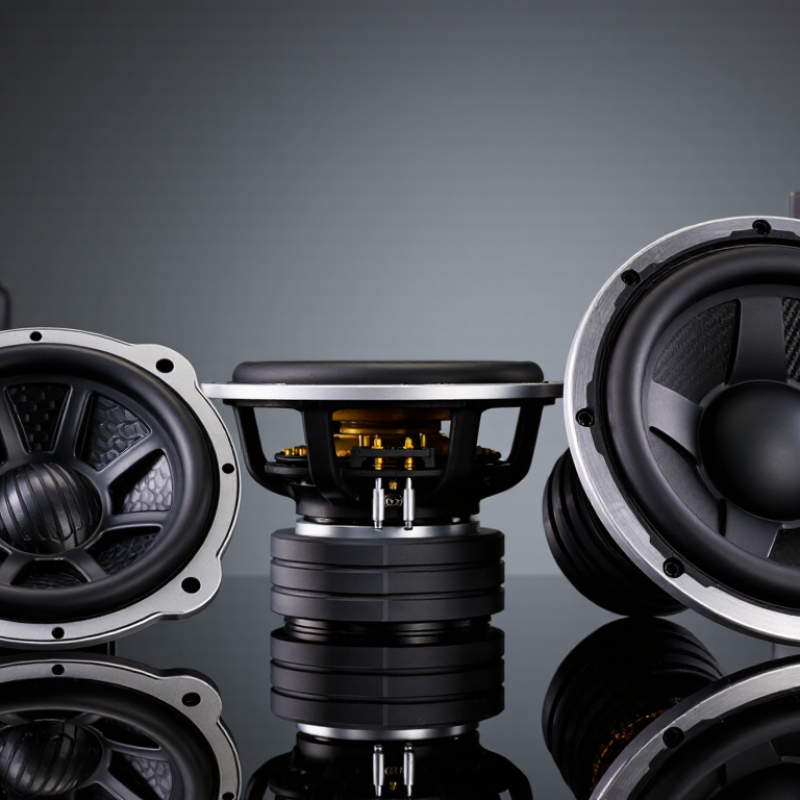
Wholesale buyers should match subwoofer types with vehicle space, listening habits, and installation plans. Sealed subwoofers deliver controlled, accurate bass. They suit premium interiors and smaller cabins. Ported subwoofers produce louder, deeper bass with stronger air movement. They need more enclosure space and careful tuning. Under-seat subwoofers save room. They work well for compact cars and commercial fleets. Shallow-mount models fit limited mounting depth without sacrificing all low-frequency performance. Not every vehicle needs the biggest subwoofer.
During supplier evaluation, request impedance options, RMS power, sensitivity, cone material, and enclosure dimensions. Peak power can look impressive. RMS power matters more for continuous use. Ask for frequency response testing and sample units before placing large orders. Check terminal strength, stitching, magnet assembly, and cabinet sealing. A small air leak can create unwanted noise. It is easy to miss during a quick inspection.
Wholesale packaging also deserves attention. Foam protection, corner guards, and moisture-resistant cartons reduce damage during long transport. Ask whether production samples match the approved sample. This step is often neglected. Buyers should also confirm replacement parts, warranty procedures, and batch inspection records. A low quotation may hide weaker materials or inconsistent assembly. I would not call one type the best. The right choice depends on the customer’s vehicle, target price, and expected bass response. Test before scaling.
Key Specifications for Comparing Wholesale Subwoofer Suppliers
China Best Car Audio Subwoofers for Wholesale Buyers
When comparing China subwoofer suppliers, start with measurable specifications, not attractive catalog photos. Grand View Research reported that the global automotive audio market was valued at approximately USD 7.5 billion in 2023, with continued growth expected through 2030. This expansion increases supplier choice, but it also makes specification checks more important.
Ask for continuous RMS power, not only peak wattage. RMS shows the output a woofer can handle during extended testing. Confirm impedance, sensitivity, frequency response, voice-coil size, and enclosure volume. A 2-ohm model may produce more output, but it can overload an unsuitable amplifier. Sensitivity above 85 dB is often practical for efficient vehicle systems, although test conditions can change the result. Numbers can mislead.
Request third-party test sheets and one production sample. Check cone movement, terminal strength, gasket fit, and rattling at low frequencies. The CTA-2031 measurement framework supports more consistent loudspeaker testing, so suppliers using repeatable methods deserve closer attention. Also inspect batch tolerance, carton drop protection, warranty terms, and replacement procedures. In real wholesale work, a cheap unit can become expensive after returns. Measure it twice.
My own caution is simple: laboratory figures rarely reveal every vibration inside a real car. Compare samples in matching enclosures before placing a large order.
Manufacturing Standards and Quality Control in China
China Best Car Audio Subwoofers for Wholesale Buyers
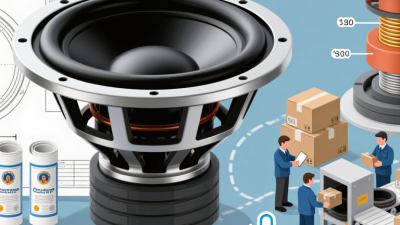
For wholesale buyers, manufacturing discipline matters more than attractive product photos. A reliable Chinese subwoofer supplier should provide clear specifications, inspection records, and stable production procedures. Production begins with incoming material checks. Technicians verify magnet weight, voice-coil alignment, cone material, and basket strength against approved specifications. Samples are measured, not simply judged by appearance. That detail matters.
During assembly, controlled glue curing and accurate coil placement help prevent rubbing and early failure. Factories should record impedance, sensitivity, frequency response, and distortion for every production batch. A listening test can reveal buzzing that instruments miss. It is useful, but not sufficient alone. Quality teams also use test tones, vibration checks, and burn-in cycles before packing. Batch codes and inspection records help buyers trace defects to a shift, machine, or material lot.
Export packaging needs equal attention. Moisture barriers, corner protection, and drop testing reduce damage during long transport. Ask for pre-shipment samples and independent inspection when order value is high. Clear tolerances are essential. Some factories promise zero defects, which sounds impressive but is not realistic. A stronger partner explains failure rates and corrective actions openly. Small revisions, such as tighter terminal crimping, often improve consistency more than expensive cosmetic changes. The process is never perfect.
Pricing, Minimum Orders, and Customization Options
China Best Car Audio Subwoofers for Wholesale Buyers
Wholesale pricing depends on power, enclosure design, materials, and testing requirements. For standard 8-inch or 10-inch subwoofers, buyers often receive factory quotes near US$35–90 per unit at 100-unit orders. Larger models and reinforced enclosures cost more. Grand View Research reported the global automotive audio market at approximately US$7.7 billion in 2023, showing strong demand but also intense price competition. Low prices can mislead. Thin cones, weak terminals, or inconsistent impedance may increase returns. I have seen this happen.
Minimum order quantities vary by production method. Stock models may start at 20–50 units, while private-label orders commonly require 100–300 units. Custom tooling can push the MOQ above 500 units. Custom options may include logo printing, cone materials, voice-coil specifications, grille design, packaging, and impedance ratings. The International Trade Centre recommends careful product classification and supplier verification for cross-border purchasing. Buyers should request test reports, frequency-response curves, sample units, and carton measurements before confirming volume. Testing costs are easy to overlook. According to Fortune Business Insights, automotive audio demand is expected to grow steadily through the decade, but forecasts are not guarantees. My own cost estimate can be wrong when copper, freight, or mold prices change. A written quotation should separate product cost, tooling, testing, packaging, and shipping.
China Best Car Audio Subwoofers for Wholesale Buyers - Pricing, Minimum Orders, and Customization Options
| Subwoofer Type |
Typical Size |
RMS Power |
Impedance |
Indicative Wholesale Price
(USD/Unit, EXW) |
Typical MOQ |
Customization Options |
Estimated Lead Time |
| Shallow-Mount Passive Subwoofer |
8 in / 200 mm |
150–300 W |
2 or 4 Ω |
$22–$42 |
50–100 units |
Cone material, grille, terminal style, packaging, label, and impedance |
20–35 days |
| Standard Passive Subwoofer |
10 in / 250 mm |
250–500 W |
2 or 4 Ω |
$28–$58 |
50–100 units |
Magnet size, voice-coil configuration, surround material, grille, and carton design |
25–40 days |
| High-Power Passive Subwoofer |
12 in / 300 mm |
400–800 W |
2 or 4 Ω |
$42–$88 |
30–80 units |
Dual voice coil, upgraded suspension, dust cap, terminal plate, and protective grille |
30–45 days |
| Competition-Grade Subwoofer |
15 in / 380 mm |
800–1,500 W |
1, 2, or 4 Ω |
$85–$180 |
20–50 units |
Motor structure, coil winding, spider stiffness, basket finish, terminals, and packaging |
35–55 days |
| Powered Under-Seat Subwoofer |
6.5–8 in |
100–250 W |
2 or 4 Ω |
$48–$95 |
50–100 units |
Amplifier output, enclosure dimensions, wired remote, input sensitivity, and cable set |
25–45 days |
| Powered Enclosed Subwoofer |
8–12 in |
200–600 W |
2 or 4 Ω |
$75–$165 |
30–80 units |
Enclosure material, carpet or textured finish, amplifier features, grille, and retail box |
30–50 days |
| Vehicle-Specific Enclosure Subwoofer |
8–12 in |
200–500 W |
2 or 4 Ω |
$65–$145 |
50–200 units |
Vehicle fitment, enclosure shape, mounting hardware, connector type, and installation guide |
35–60 days |
| Dual-Subwoofer Enclosure |
2 × 10 or 2 × 12 in |
500–1,200 W |
1, 2, or 4 Ω |
$120–$260 |
20–50 units |
Ported or sealed design, internal bracing, terminal configuration, finish, grille, and carton size |
35–60 days |
Note: Prices are indicative EXW wholesale ranges in USD and may vary according to order volume, materials, specifications, testing requirements, packaging, tooling, shipping terms, and customization level. Final pricing and lead time should be confirmed against the approved product specification.