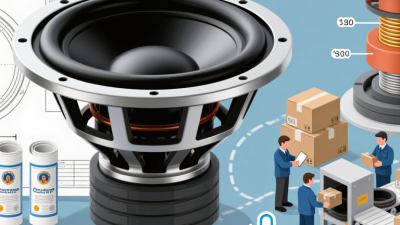
China Top Car Subwoofer Suppliers for Global Buyers
For global buyers, finding a reliable China-based car-audio supplier means looking beyond a low unit price. A subwoofer for car must suit the vehicle, amplifier, enclosure, and listening goals. A compact sedan may need a different setup from a large SUV. Even a well-built driver can disappoint when its specifications do not match the rest of the system.
Audio researcher Dr. Sean Olive’s work on loudspeaker evaluation supports a useful principle, expressed here as a paraphrase rather than a direct quotation: “Judge a speaker by consistent performance, not impressive claims alone.” That matters when comparing suppliers. Ask for clear RMS power ratings, frequency-response data, product samples, and details about cone materials, voice coils, and quality checks. Requesting test documentation is sensible. It is not a guarantee.
Details matter. Supplier selection also depends on communication, production capacity, packaging, and the ability to handle repeat orders. Buyers should confirm specifications in writing and compare sample performance before placing a large order. Still, no checklist can remove every uncertainty; real installations can reveal issues that product sheets miss. That is worth admitting. The following guide examines China’s car-subwoofer suppliers through practical criteria, helping global buyers ask sharper questions, assess trade-offs, and choose products suited to their markets rather than relying on broad promises.
Understanding China’s Car Subwoofer Supplier Landscape
China’s car subwoofer supplier landscape includes factories focused on drivers, assembled audio systems, and custom OEM production. Their capabilities vary. Some suppliers offer flexible specifications, while others rely on established designs with limited changes. Buyers should compare more than quoted prices: ask about cone materials, voice-coil dimensions, impedance options, and enclosure compatibility. A clear specification sheet makes supplier responses easier to verify.
Tips: Request a sample and its test data. Check frequency response, power handling, and impedance against your intended setup. Ask how the supplier checks production consistency, and whether the sample uses the same materials as bulk orders. Small details matter.
Communication quality is part of the assessment. A reliable supplier should explain tolerances, packaging, lead times, and what happens when products fail inspection. Request recent production photos or a live video call, but treat them as supporting evidence, not proof. Independent inspection can help before shipment. Be cautious when every specification is described as “customizable”; customization may involve higher minimum quantities or longer development time. I would not judge a supplier by one polished sample alone. Bulk consistency is less visible, and that is where careful checks pay off.
Types of Car Subwoofers Offered by Chinese Suppliers
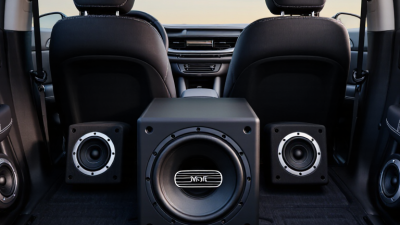
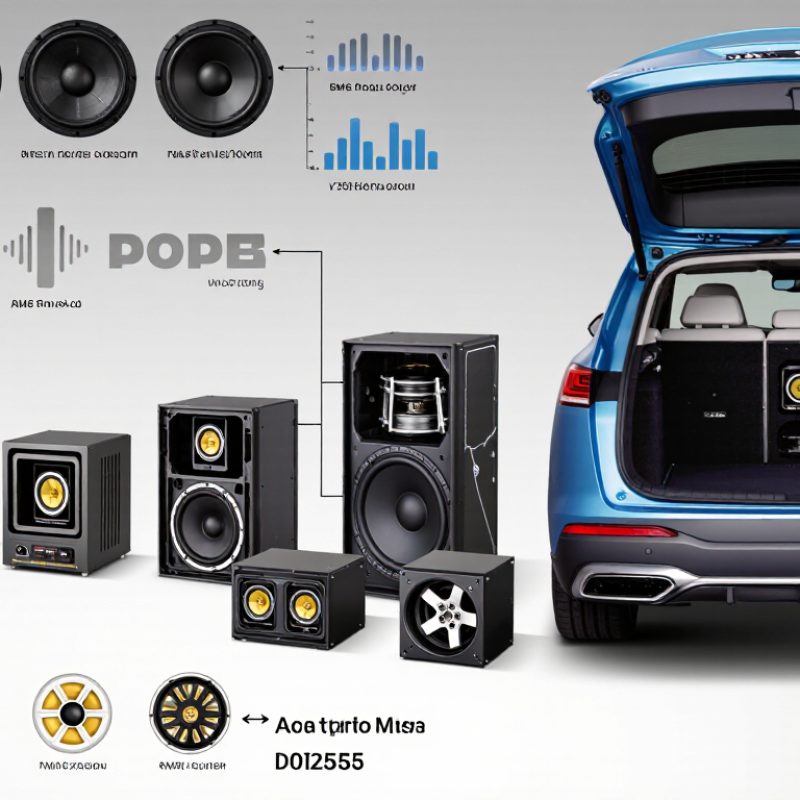
Chinese car-audio suppliers commonly offer sealed, ported, bandpass, shallow-mount, and powered subwoofers.
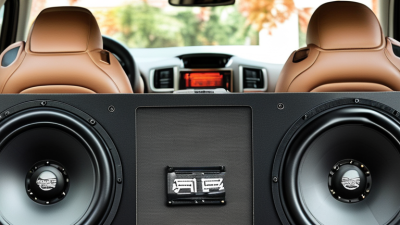
Sealed enclosures use a closed cabinet for controlled bass and a compact footprint. Ported models add a tuned vent, often producing stronger output around a target frequency. Bandpass designs can deliver forceful, narrow-range bass, but enclosure dimensions and tuning matter greatly.
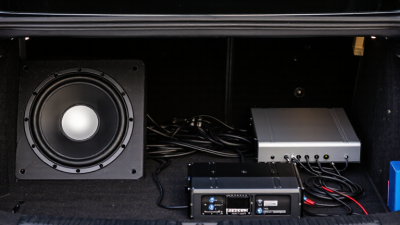
For vehicles with limited cargo space, suppliers also make shallow-mount drivers and under-seat powered units. Check the available depth, amplifier rating, impedance, and enclosure volume before comparing quotations. A small mismatch can mean weak bass or difficult installation.
There is a trade-off. The International Energy Agency’s Global EV Outlook 2024 reports nearly 14 million electric cars sold worldwide in 2023, about 18% of car sales. This shift makes compact, low-power options relevant to many buyers, though vehicle layouts differ.
Ask suppliers for frequency-response curves, test conditions, and enclosure drawings; a headline wattage alone tells little about real performance.
Some product sheets still omit useful details. That deserves a second look.
How to Evaluate Chinese Car Subwoofer Manufacturers
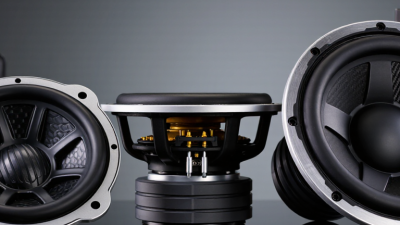
Evaluating Chinese car subwoofer manufacturers takes more than comparing quoted prices. Ask for detailed specifications, including impedance, continuous power handling, sensitivity, and frequency response. Check whether those figures come from documented tests or marketing estimates. A high peak-power number alone tells you little about daily performance. Request a sample and inspect the cone, surround, terminals, and voice-coil assembly. Measure the mounting depth, too; a few millimeters can affect installation.
Tips: Ask for a current product specification sheet, sample lead time, and written quality-control steps. Confirm how the manufacturer checks impedance and tests units before shipment. Compare the sample with the production specification, not just its appearance.
Reliable suppliers should explain their production capacity, inspection process, and options for packaging and customization. Ask how they handle defects and replacements, and get the agreed terms in writing. Clear, specific answers are more useful than broad promises. If possible, review factory documentation and arrange an independent inspection before a large order. Keep communication records. One weakness in this evaluation is that a single sample cannot reveal long-term durability, so avoid treating it as proof of consistent production quality.
Quality Standards, Certifications, and Export Capabilities
For global buyers, a car subwoofer’s quality is more than its bass response. Ask suppliers for documented checks on power handling, impedance, frequency response, and temperature performance. A sample test report should identify the test method, equipment, and date—not just show a pass result. Useful details include a measured impedance curve and a clear record of distortion testing at specified output levels. Small details matter.
Certifications need careful review. An ISO 9001 certificate concerns a supplier’s quality management system; it does not certify every subwoofer model. Check the issuer, validity period, factory address, and certification scope. For markets with environmental or electromagnetic requirements, request applicable declarations and model-specific supporting documents. Requirements differ by destination, so confirm them with a qualified importer or compliance professional.
Export capability shows up in the paperwork and the packing. Ask whether the supplier can provide consistent product specifications, commercial invoices, packing lists, and certificates of origin when needed. For a physical check, inspect carton dimensions, terminal protection, and whether the cone and surround are cushioned against pressure. A neat sample shipment can still hide weak batch controls. I would verify production samples against the approved specification, even when that adds time. That step is easy to skip. It can prevent expensive surprises.
Sourcing and Building Supplier Partnerships in China
China’s supplier base is broad, but a catalog alone tells buyers little. The China Association of Automobile Manufacturers reported 31.28 million vehicles produced and 31.44 million sold in 2024. These figures describe the wider automotive ecosystem, not subwoofer output or supplier performance. Use them as context, not proof. Request a dated factory audit, component traceability, and samples built to your drawings. Put cone material, voice-coil dimensions, impedance tolerance, and power-test conditions in writing. Small details matter.
Build the partnership around a controlled pilot order. Agree on inspection criteria, packaging, lead times, and how engineering changes will be approved. Ask the supplier to share test records for frequency response, distortion, and thermal endurance under defined conditions. A perfect first sample can still hide process drift. That is worth checking. Compare pre-production samples with units from the pilot batch, and document any variation before scaling volume. Keep communication direct, with one technical contact and one commercial contact on each side. CAAM’s figures show a large manufacturing environment, but they cannot replace supplier-level checks. A careful process may feel slower at the start; unclear specifications often cost more later.